


The Asian Scientist 100
Xi Dai

Institution
Hong Kong University of Science and Technology
Country
Hong Kong
Field
Physics
Dai received the 2025 Future Science Prize in Physical Science for pioneering contributions to condensed matter physics and topological materials, including predicting novel quantum states and enabling their experimental realization, advancing next-generation electronic and quantum technologies.
(Photo: The Future Science Prize Foundation)
AWARDS
- 2025 Future Science Prize in Physical Science
Related articles

The Brain Beats To An Electric Clock
Surprisingly, it is voltage rather than calcium ions that is synchronized in the region of the brain that controls the circadian rhythm.

Who Run The (Cockroach) World? Girls!
Female cockroaches housed as a group can reproduce asexually and maintain a colony without a male up to at least three years.

China Ramps Up Plans To Put Man On The Moon
How soon will China be able to put a man on the moon? Give them about three years, says our Final Frontiers columnist.

China’s Moon Rover Starts Exploring
China's Yutu moon rover has started exploring the surface of the moon, sending back the first photos it has taken on the moon.

Four Legged-Robot Spontaneously Changes Gait
Researchers in Japan have designed a robot that uses decentralized control to change from walking to trotting and galloping.

Tighter Air Quality Standards Could Save Millions Of Lives In China
Bringing China's air quality to the World Health Organization's standards could help prevent three million deaths a year.

When Is The Best Time To Eat ‘Good’ Fats?
Eating food with long chain polyunsaturated fatty acids during the day might help to lessen the risk of metabolic syndromes, researchers say.

One Material, Three Colors
Researchers have developed a material that can switch its color between yellow, red and orange in response to heating, fuming and grinding.
Soft, But Stronger Than Steel
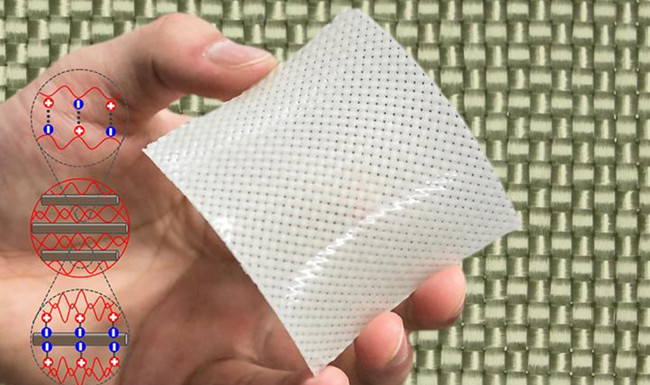
By combining soft hydrogels with a woven glass fiber fabric, researchers have made a highly flexible composite material that is tougher than steel.