


The Asian Scientist 100
Tran Thi Thu Ha

Institution
Thái Nguyên University
Country
Vietnam
Field
Agriculture
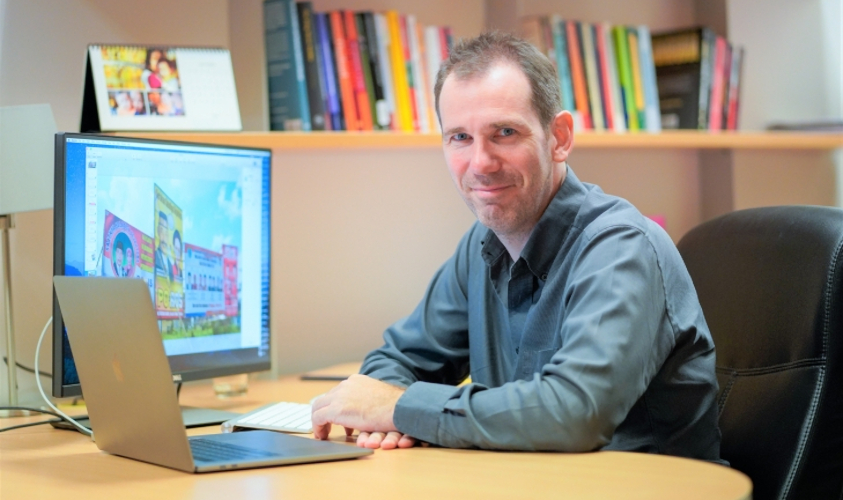
Tran was awarded the Vietnamese Kovalevskaia Award 2019 for her research on the breeding and intensive cultivation of trees, the propagation and rearing of non-timber forest products and medicinal herbs, and the development of local medicinal plants.
(Photo: Thái Nguyên University)
AWARDS
- Kovalevskaia Award 2019
Related articles

Targeting Mitochondria To Kill Cancer Cells
Scientists in South Korea have created a photosensitizing agent that accumulates in the mitochondria of cancer cells to improve the effectiveness of photodynamic therapy.

Reprogramming Stem Cells Without Genetic Modifications
Scientists in Singapore have converted fibroblasts into pluripotent stem cells without introducing external factors for genetic reprogramming.

Calling All Connections: What Social Networks Can Teach Us About Society
The multidisciplinary field of social networks research can shed light on diverse aspects of society, said speakers at SMU LARC’s Social Networks Day Workshop.
On The Trail Of Identity Politics
There is no better place to study identity politics than Southeast Asia, a hotbed of political, ethnic and religious diversity, says SMU Assistant Professor Colm Fox.

Financial Literacy For The Young And Young At Heart
Financial knowledge and retirement preparedness go hand in hand, and it’s never too early to start teaching it.

So You Want To Land That Data Science Internship? Here’s What You Need To Know
Having good technical skills alone is not enough to set you apart from the competition, said a panel of employers and current interns.

Asia’s Rising Scientists: Tanzima Hashem
Tanzima Hashem is working on computational techniques that would allow us to use location-based services without giving away our private personal data.

Asia’s Rising Scientists: Arun K. Shukla
Arun K. Shukla is tackling some of the most challenging questions in the field of G protein-coupled receptor biology.

China: Rule-Taker, Rule-Shaker Or Rule-Maker?
Despite its ascent on the world stage, SMU Associate Professor Henry Gao’s research shows that China may prefer to keep a low profile in global organisations.