


The Asian Scientist 100
Tran Thi Thu Ha

Institution
Thái Nguyên University
Country
Vietnam
Field
Agriculture
Tran was awarded the Vietnamese Kovalevskaia Award 2019 for her research on the breeding and intensive cultivation of trees, the propagation and rearing of non-timber forest products and medicinal herbs, and the development of local medicinal plants.
(Photo: Thái Nguyên University)
AWARDS
- Kovalevskaia Award 2019
Related articles

Making Retirement A Gig For Life
How prepared are gig workers for retirement, and how can older Singaporeans steer clear of financial mistakes? CREA researchers considered these questions at a roundtable on ageing and financial preparedness.

Three Invaluable Lessons For Building Healthcare AI
The human body is far more complicated than a game of Go, so healthcare AI solutions need to bring in expert knowledge early on.

Turning Carbon Dioxide Into Hydrocarbon Fuels
Scientists in South Korea have developed photocatalysts that allow carbon dioxide to be converted into usable fuel using just sunlight.
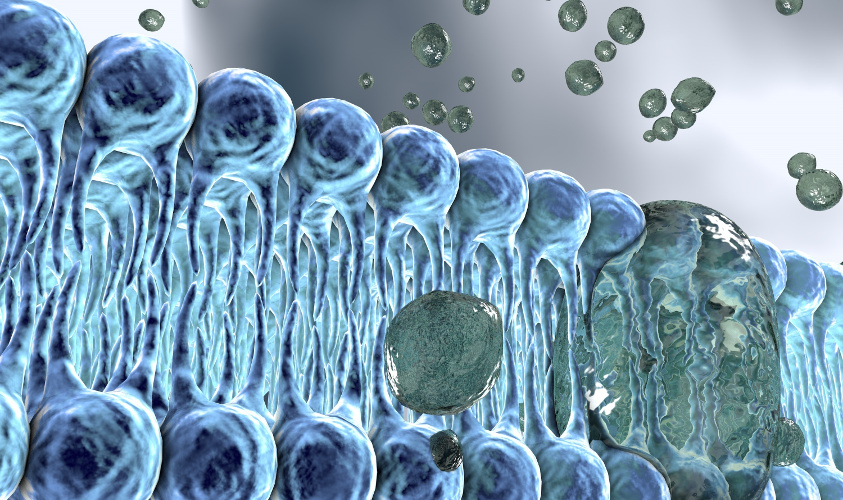
Bioengineering A Synthetic Ion Channel
A team of researchers in Singapore has developed an artificial pore-forming ion channel which could be used to tackle cystic fibrosis, bacterial infections and cancer.

A Three-Pronged Attack On Parkinson’s Disease
A research group in South Korea has developed a set of three nanoparticles with differing properties to remove reactive oxygen species in various cellular compartments.

Turning The Hourglass Sideways
Science is challenging the notion that aging is an inescapable fact of life. Here are six strategies that have been shown to prolong life in model organisms, and, in some cases, even humans.

Functional Carbon Materials Made Simple And Scalable
Chinese researchers have proposed a simple and inexpensive method to prepare carbon nanomaterials from small organic molecules.

When Deep Tech Helps Doctors See Clearer
With AI and cloud computing making medical imaging more accurate and intuitive, we are closer to Star Trek's tricorder than you might expect.

A Twist In The Tale Of mRNA Tails
A team of scientists in South Korea have discovered that mixed mRNA tails act like a shield that extends the lifespan of mRNA species.