


The Asian Scientist 100
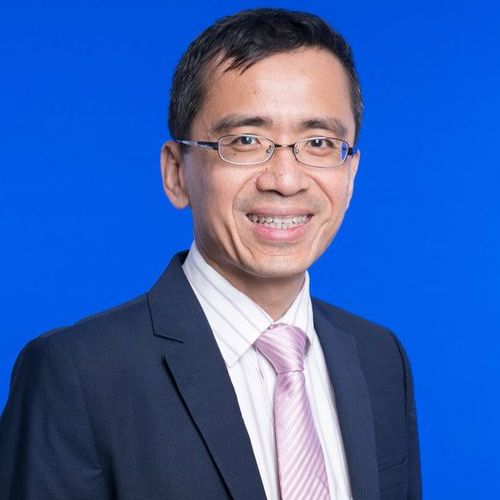
Tan Eng King
Institution
National Neuroscience Institute
Country
Singapore
Field
Life Sciences
Tan Eng King received the 2018 President’s Science Award for identifying clinical biomarkers, developing novel models and transforming patient care in Parkinson’s Disease. (Photo: National Neuroscience Institute)
Related articles

10 Asian Cities To Suffer From Perennial Water Shortages In 2050
Research reveals that more than one billion urban residents will face serious water shortages by 2050, with China and India among those most affected by water shortages.

Worldwide Study: Asia’s English Proficiency Lower Than Expected
A comprehensive index ranking the proficiency of non-native English speakers has shown a correlation between English proficiency and income.

ASLAN Pharma To Develop Bristol-Myers Squibb’s BMS-777607 Compound
ASLAN Pharma and Bristol-Myers Squibb will co-develop an investigational small molecule inhibitor of the MET receptor tyrosine kinase for treatment of solid tumors.
OPINION: Time To Dispel The Fear Of Nanoparticles In Sunscreens
Paul Wright, Associate Professor of Immunotoxicology at RMIT, says that it is time that we stop fearing nano sunscreen formulations.

Diesel Fumes Linked To Childhood Brain Tumors, Study
Researchers have found a link between brain tumors in children and their parents' exposure to diesel exhaust fumes before birth.
Giant Pandas May Run Out Of Bamboo Due To Climate Change
New models are predicting that climate change may kill off swaths of bamboo that pandas need to survive.
The Neglected Allies Of Modern Medicine
Is the enduring attraction of traditional medicine a good thing or a paradox? Zaria Gorvett investigates.

Vietnam’s Baseball Cap “Helmets”
Vietnam, where more than nine out of ten registered vehicles are motorcycles, is grappling with how to boost road safety.
Snakes & Folk Tales Meet Science In Disaster Warning
Indigenous knowledge and science often seem poles apart, but meshing them can curb disaster risk, reports Smriti Mallapaty.