


The Asian Scientist 100
Tan Eng King
Institution
National Neuroscience Institute
Country
Singapore
Field
Life Sciences
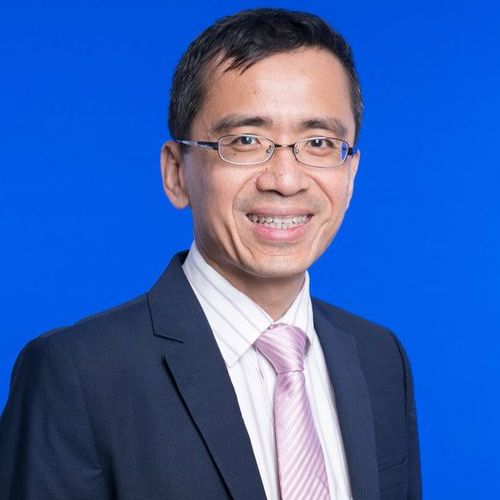
Tan Eng King received the 2018 President’s Science Award for identifying clinical biomarkers, developing novel models and transforming patient care in Parkinson’s Disease. (Photo: National Neuroscience Institute)
Related articles

Children To Get Their Own Anti-Tuberculosis Drugs
Several countries in Southeast Asia are now preparing for the rollout of the newly-formulated drugs, with the Philippines as one of the early adopters.

Silicon Boosts Rice Yields, According To LEGATO Researchers
Researchers at the recent LEGATO conference held in the Philippines presented five years' worth of study findings into rice cultivation in the region.

The China Space Friends Club
The US refuses to collaborate with China on space missions, but no matter: the Asian powerhouse has the rest of the world in its corner.

Super Stretchy Nanowires May Pave The Way For Flexible Electronics
Researchers have developed nanowires that are as strong as they are stretchy, making them ideal for electronic skins.

The Seesaw Of Supply And Demand
SMU Assistant Professor Pradeep Varakantham takes on complex urban challenges by dynamically and continuously matching supply with demand.

Goblin Sharks Clamp Down On Prey Using ‘Slingshot’ Jaw
By analyzing rare video footage, Japanese researchers have found that goblin sharks project their distinct, protruding jaws forward at incredible speeds to bite prey.

Fossils From China Show History Of Plants Colonizing Land
The formation of deep soils millions of years ago allowed the first trees to survive, and this may have occurred much earlier than once thought, according to a study.

Mysteries Of The Unseen World Reveals A Stunning Microscopic Realm
Using time-lapse photography, this short film screened at Science Centre Singapore's Omni-Theatre peels away layers of ordinary life to reveal hidden marvels beneath.

Whose Wrong, Whose Liability
Determining who is legally answerable for a wrong in the civil context can be complicated, but research being done by SMU Associate Professor Lee Pey Woan is helping to clear the air.