


The Asian Scientist 100
Lu Ke

Institution
Chinese Academy of Sciences
Country
China
Field
Materials Sciences
Lu is the winner of the 2020 Future Science Prize (Physical Science Prize) for discovering and synthesizing a superior nanotwinned structure and gradient nanostructure.
(Photo: Future Science Prize)
AWARDS
- Future Science Prize 2020
Related articles

Test For Cancer In A Drop Of Blood
Chinese scientists have tested a new cancer biomarker detection kit in clinical trials, showing that it can be used to diagnose lung cancer.
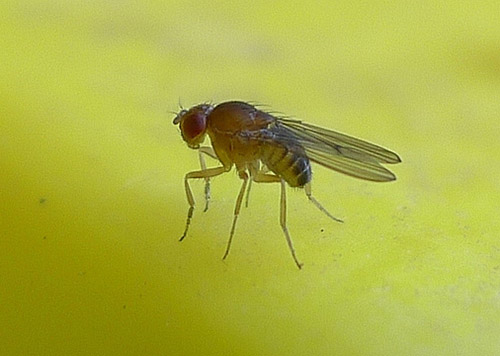
More Sex = Longer Lives… In Fruit Flies
Male fruit flies with fewer opportunities to mate had serious health conditions and aged faster, according to a study.

Study: Bangladesh Makes Strides In Healthcare Despite Poverty
Despite its high poverty level, Bangladesh has achieved lower infant mortality rates compared to India, Pakistan and Nepal.

Challenges Of An Ageing Asia
As Asia braces for an unprecedented ‘silver tsunami’, SMU Assoc Prof Rhema Vaithianathan is studying how it is changing not only the way we fund care for the elderly, but also how that care is being delivered.

Winning The Data Security Arms Race
In the era of smartphones and tablets, SMU Associate Professor Ding Xuhua predicts that the battle between data security experts and hackers will increasingly shift to mobile devices.

Finding One’s Identity In A Globalised World
SMU Assistant Professor Hoon Chang Yau argues for the need to move away from an essentialist view of identity to one that is aligned with the complexities of the 21st century.

Pharmaceutical IT Asia Congress To Highlight Digital Healthcare Innovation
Oxford Global’s Pharmaceutical IT Asia Congress will take place from March 25-26, 2014 in Singapore..

Long-Term Oral Contraceptive Use Increases Glaucoma Risk Two-Fold
A research study has found that women who have taken oral contraceptives for three or more years are twice as likely to suffer from glaucoma.

‘Magic Numbers’ Disappear From Neutron-Rich Magnesium Isotopes
Researchers have demonstrated that the magic numbers 20 and 28 disappear from all neutron-rich magnesium isotopes.