


The Asian Scientist 100
Lu Ke

Institution
Chinese Academy of Sciences
Country
China
Field
Materials Sciences
Lu is the winner of the 2020 Future Science Prize (Physical Science Prize) for discovering and synthesizing a superior nanotwinned structure and gradient nanostructure.
(Photo: Future Science Prize)
AWARDS
- Future Science Prize 2020
Related articles
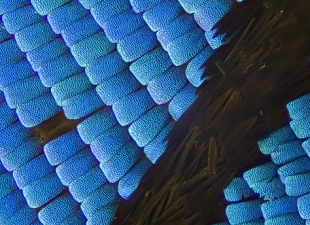
Physicists Decipher Butterfly Wings’ Color-Changing Effect
Researchers have uncovered how subtle differences in the tiny crystals on butterfly wings create stunningly varied patterns of color.

Study Asks What Type Of Drinker Are You?
RMIT University researchers have studied thousands of alcohol drinkers to reveal four types of drinkers.

Rice Consumption In Bangladesh Linked To High Arsenic Exposure & Toxicity
A study of more than 18,000 people in Bangladesh has established a link between rice consumption and arsenic exposure and toxicity.

Thickness Of Retina May Determine Alzheimer’s Stage
Researchers have found a link between vision loss and Alzheimer's disease based on the thickness of a layer in the retina called the inner nuclear layer.

Indian Mars Mission Beats Neighbors, Sniffs For Methane
Last Tuesday, the Indian space agency launched a mission to Mars in order to place a satellite into orbit around that planet.

Top Concerns For Asia: Mental Health, Obesity, NCDs
Mental health, obesity and non-communicable diseases are top-priority goals for the region between 2015 and 2030, according to experts from nine Asian countries and Australia.

ARX Gene Linked To Common Intellectual Disability
Researchers have discovered that a genetic mutation leads to a commonly inherited intellectual disability due to a reduction in certain proteins in the brain.

MicroRNA Acts As Genetic Switch For Breast Cancer Spread
Queensland scientists have identified a genetic “switch” that indicates whether a woman’s breast cancer will spread.

A Gene Variant That Makes Sorghum Easier To Digest
Scientists have identified a sorghum gene variant that could lead to more digestible feedstock and much-improved nutrition for some of the world’s poorest nations.