


The Asian Scientist 100
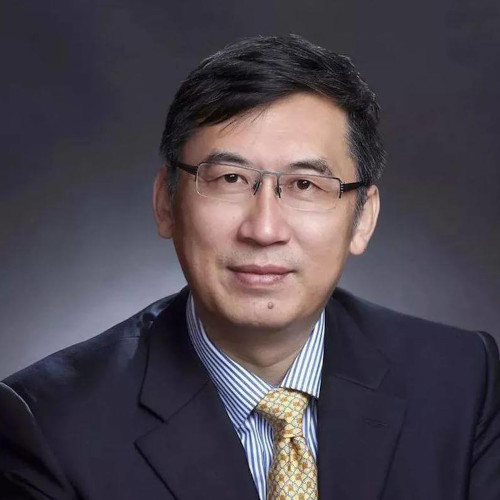
Lu Ke
Institution
Chinese Academy of Sciences
Country
China
Field
Materials Sciences
Lu is the winner of the 2020 Future Science Prize (Physical Science Prize) for discovering and synthesizing a superior nanotwinned structure and gradient nanostructure.
(Photo: Future Science Prize)
AWARDS
- Future Science Prize 2020
Related articles

Reversing Obesity’s Impact On Fertility
Drugs targeting the mitochondria could potentially be used to restore fertility to obese women, study suggests.
Asian Scientist’s Guide To Surviving Chinese New Year
It's not always easy, but Chinese new year and other festive occasions are actually a great opportunity to try out your science communication skills.

Stopping Inflammation-Related Cancers
Rather than inhibiting the expression of FAT-10, simply blocking its binding to MAD2 could help prevent tumor progression.

Eisai’s Thyroid Cancer Drug Gets US FDA Approval
A Phase III trial has shown that the drug Lenvima significantly improves the progression-free survival of thyroid cancer patients.

Myopia A Middle-Class Disease?
A study of 20,000 children shows that nearsightedness is twice as prevalent in middle-income areas than lower-income ones in China.
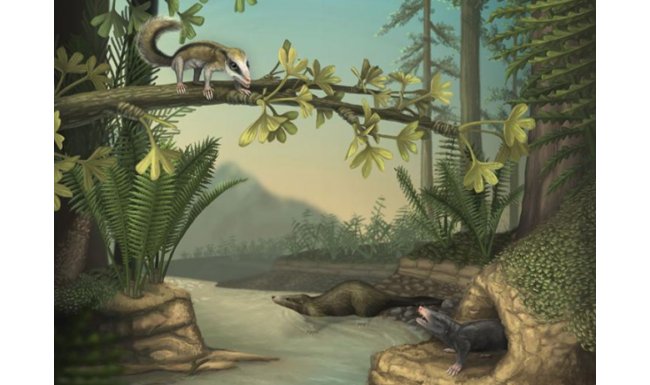
How Early Mammals Adapted In An Age Of Dinosaurs
Ancestral mammals survived by occupying niche environments such as trees and subterranean caves.
Fighting Cavities With Nanoparticles
Silicon nanoparticles soaked with disinfectants can inhibit bacterial growth for up to three days and could be used to prevent oral biofilm formation.

NTU Launches US$24 Million Institute Dedicated To Structural Biology
The new institute chaired by Professor Daniela Rhodes will focus on multidisciplinary problems in the field of structural biology.

How Peptide Binding Influences Autoimmunity
Smaller peptides that are not anchored to the MHC molecule could potentially cause autoimmunity by activating self-reactive T-cells.