


The Asian Scientist 100
Lu Ke

Institution
Chinese Academy of Sciences
Country
China
Field
Materials Sciences
Lu is the winner of the 2020 Future Science Prize (Physical Science Prize) for discovering and synthesizing a superior nanotwinned structure and gradient nanostructure.
(Photo: Future Science Prize)
AWARDS
- Future Science Prize 2020
Related articles

Parenting: The Good, The Bad & The Intrusive
A recent study has shown that intrusive parenting leads to kids that were overly critical of themselves. So how much should a parent’s expectations influence their child’s learning journey?

Why Are Law And Medicine So Popular In Singapore?
Being a doctor or a lawyer is a popular aspiration for many Singaporeans, and earning power is just one of many reasons behind it.

Should Asian Universities Offer The US-style Liberal Arts Degree?
Asia is starting to embrace the American style liberal arts education, writes Daniel Soo, a third-year student from Yale-NUS, Singapore's first liberal arts college.

Images From Space Show Asia’s Breathtaking Beauty (VIDEO)
These images taken from space showcase the breathtaking beauty of Asia’s diverse landscapes.

Can ASEAN Achieve Universal Healthcare? (VIDEO)
Achieving universal health coverage is a goal that many countries strive towards. Will ASEAN see a day where everyone—including rural dwellers—has full access to affordable quality healthcare?
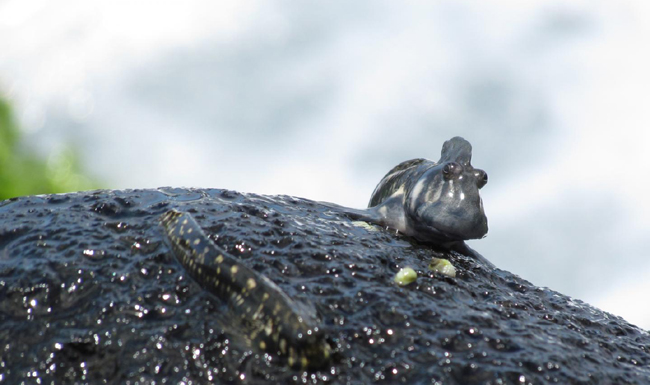
Fish Out Of Water Are More Common Than You Think
Fish evolved the ability to live on land many times, according to a study that challenges the perception that this extreme lifestyle shift was likely to have been a rare occurrence.

Treating Water Using The Rules Of (Magnetic) Attraction
Using magnetic fields, researchers are able to analyze the amount of metal particles in tap water during water treatment processes.

Intrusive Parents Breed Self-Critical Kids
Children with intrusive parents had high or increased levels of self-criticalness and greater risk of depression and anxiety.

Genome Instability May Be Linked To Schizophrenia
Researchers have identified significantly more DNA sequence repeats in patients with schizophrenia than in control individuals.