


The Asian Scientist 100
Lu Ke

Institution
Chinese Academy of Sciences
Country
China
Field
Materials Sciences
Lu is the winner of the 2020 Future Science Prize (Physical Science Prize) for discovering and synthesizing a superior nanotwinned structure and gradient nanostructure.
(Photo: Future Science Prize)
AWARDS
- Future Science Prize 2020
Related articles

Six Researchers Awarded The 2017 Infosys Prize
Six scientists have been awarded the prestigious Infosys Prize 2017, each receiving US$100,000 for their excellence in research.

Kerry Sieh Elected As AAAS Fellow
Sieh, director of the Earth Observatory of Singapore, has been elected as an AAAS fellow for his contributions to paleoseismology and natural hazards research.

Asia’s Scientific Trailblazers: Amit Sharma
Dr. Amit Sharma is leading the charge in the search for new drugs against the ancient scourge of malaria.

Asia’s Scientific Trailblazers: G. Ravindra Kumar
Science is an uphill task, but one that laser physicist Professor G. Ravindra Kumar relishes and is deeply passionate about.
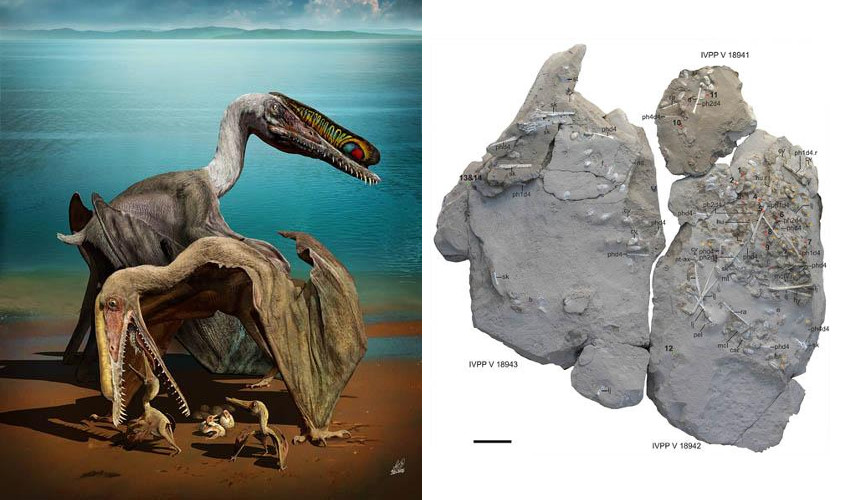
Fossilized Eggs Shed Light On Flying Dinosaurs
Three-dimensionally preserved eggs of pterosaurs reveal the history behind the life cycle of the dinosaur.

Kazutoshi Mori Wins 2018 Breakthrough Prize
Kazutoshi Mori was recognized for his discovery of the unfolded protein response, a cellular quality-control system that detects disease-causing unfolded proteins and directs cells to take corrective measures.

Ramp Up Your Resume
Having a well-crafted CV is the first step through the door to a desired job; here are four tips to help you put together a polished one.

When Lightning Strikes, Antimatter Spikes
Gamma ray bursts produced during lightning strikes can generate antimatter, Japanese scientists say.

AI Assists In Water Resource Management
Scientists have tested two models of artificial intelligence for forecasting groundwater reserves, showing that the support vector regression method has good predictive power.