


The Asian Scientist 100
Long Ran

Institution
University of Science and Technology of China
Country
China
Field
Chemistry
Long won the 2017 L’Oréal UNESCO For Women in Science International Rising Talent award for her research on photocatalysts for carbon dioxide reduction.
(Photo: L’oréal Foundation)
AWARDS
- 2017 LOréal-UNESCO For Women in Science International Rising Talent Award
Related articles
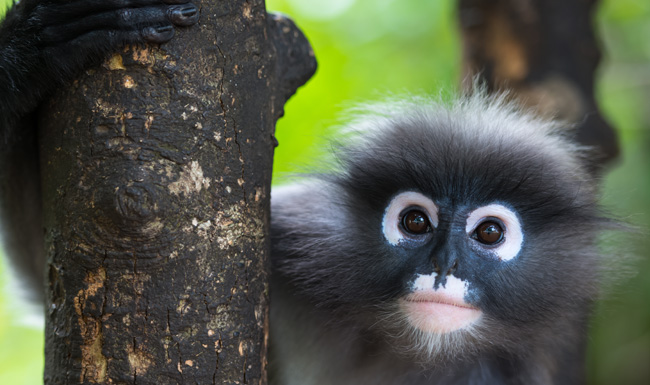
No Monkey Business: Successful Eye Stem Cell Transplant In Monkeys
Under certain conditions, transplanted stem cells from one monkey to another survived without rejection for at least six months.

The UN’s Role In Haiti’s Cholera Crisis
The UN has acknowledged its role in Haiti's cholera outbreak after much denial, and detective work by researchers that traced its origin to a UN camp. How did they do it?

Hooray! The Giant Panda Is No Longer An Endangered Species
What an upgrade: the giant panda is no longer listed as endangered, but is now a vulnerable species.

The Tale Of The Short-Tailed Cat (VIDEO)
A mutation in the HES7 gene is responsible for the short-tailed trait in Japanese Bobtail and Chinese short-tailed feral cats, a study finds.

The Builder
Professor Low Teck Seng has worn many hats: dean of engineering at NUS, founding principal of Republic Polytechnic, managing director of A*STAR, and now, CEO of Singapore’s National Research Foundation.

A (Dino) Bone To Pick
Leo Tan, professor of biology at the National University of Singapore, was instrumental to the opening of Singapore's first natural history museum.

UNESCO: ASEAN Economy Community Likely To Spur Scientific Cooperation
The ASEAN Economic Community could also spur both the cross-border movement of researchers and greater specialization, in turn broadening cooperation in science and technology.

Like Kites, Messenger Molecules Need Tails To Function
In biological cells, messenger molecules called mRNA behave similar to kites, requiring a tail for stability.

Scientists Zoom Into Tooth Decay At The Nanoscale
The research has resulted in the first-ever three-dimensional map showing the positions of magnesium ions critical in the tooth decay process.