


The Asian Scientist 100
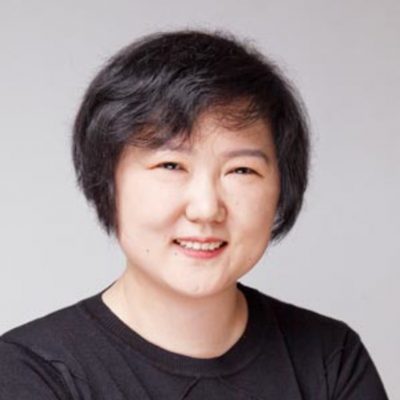
Long Ran
Institution
University of Science and Technology of China
Country
China
Field
Chemistry
Long won the 2017 L’Oréal UNESCO For Women in Science International Rising Talent award for her research on photocatalysts for carbon dioxide reduction.
(Photo: L’oréal Foundation)
AWARDS
- 2017 LOréal-UNESCO For Women in Science International Rising Talent Award
Related articles
A Smart Textile That Moves Like Muscle
This new smart textile can both sense and move in response to a stimulus, just like a human muscle or joint.

How Would You Solve A Knapsack Problem? Computers Want To Know
Learning how people solve problems over a range of difficulties may be crucial to making computers think more like humans.

Is The Truth Out There? FAST To Find Out
The FAST telescope in China is the latest addition to the Breakthrough Listen program, part of a set of long-term astronomical programs exploring the universe.

Ultra-Thin Ferroelectric Material Could Power Next-Gen Semiconductors
The ferroelectric material, called called hafnium oxide, could improve the performance of next-generation sensors and semiconductors.
How Roundworms Regrow Brain Cells
Understanding how roundworms regrow severed nerves could one day lead to nerve injury treatments for humans.

Getting To The Root Of Lateral Root Formation
Scientists have used 3D imaging to clarify part of the mechanism behind the formation of new roots from existing roots in plants.

Quasiparticles Caught In Real Time
Scientists have used ultracold quantum gasses to make quasiparticles slow down enough to be observed.

Balancing The Sacred And The Secular
SMU Provost Lily Kong, widely regarded as one of the world’s leading social and cultural geographers, studies the complexities that surround a society’s religious spaces and practices.

French-Japanese Joint Lab To Study Materials Under Extreme Conditions
Institutes from France and Japan have launched a joint laboratory in Sendai, Japan to study the behavior of materials subject to extreme and complex stress.