


The Asian Scientist 100
Kim Ho Min
Institution
Korea Advanced Institute of Science and Technology
Country
South Korea
Field
Biomedical Sciences
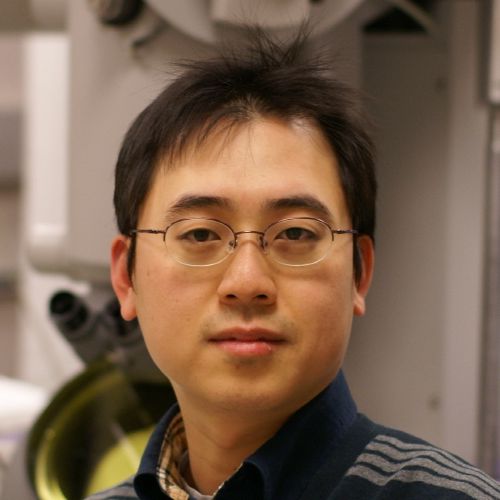
Kim was awarded the 2018 Asan Award for Young Medical Scientists for medical scientists under the age of 40. (Photo: Korea Advanced Institute of Science and Technology)
Related articles
Controlling Light With Gold And Graphene
Using a pierced gold sheet coated in graphene, scientists have created thin lenses that can be used to manipulate the intensity and polarity of light.

Kazutoshi Mori Wins 2018 Breakthrough Prize
Kazutoshi Mori was recognized for his discovery of the unfolded protein response, a cellular quality-control system that detects disease-causing unfolded proteins and directs cells to take corrective measures.

Awareness Of Cervical And Breast Cancer Screening Lacking In Indonesia
Scientists in Indonesia have reported that only one in five Indonesian women are aware of cervical cancer screening, while only five percent of women are aware of breast cancer screening.

Licorice Extract Could Treat Parkinson’s Disease
By performing a screen of natural compounds, researchers in South Korea have identified licorice extract as a potential treatment for Parkinson’s disease.

The Brand Of You
Building a personal brand is not about self-promotion; see it as helping others understand your work and inspiring the next generation of scientists.
Simulating The Flow Of Supercooled Water
Using highly accurate computer simulations, scientists in Japan have characterized the diffusion and viscosity behavior of supercooled water.

An Ultra-Fast And Highly Sensitive Hydrogen Sensor
Scientists in Korea have developed an ultra-fast and highly sensitive hydrogen gas sensor which can detect hydrogen levels under one percent in less than seven seconds.

A Hydrogel That Says NO To Arthritis
Scientists have developed a hydrogel that could be used to absorb extra fluids in swelling joints and release drugs to treat arthritis.
Simply Turn Up The Heat To Raise The Pressure
Scientists in Japan have discovered that simply heating graphene oxide nanosheets can generate high amounts of pressure with very little effort.