


The Asian Scientist 100
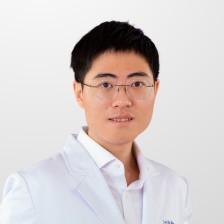
Hei Ming Lai
Institution
The Chinese University of Hong Kong
Country
Hong Kong
Field
Biomedical Sciences
Lai won the 2024 Croucher Tak Wah Mak Innovation Award for leading research in creating a 3D spatial multi-omics platform for clinical diagnostics and spatial biology research.
(Photo: The Chinese University of Hong Kong)
AWARDS
- 2024 Croucher Tak Wah Mak Innovation Award
Related articles

Memories Labelled And Erased With Light
Researchers have developed an optogenetic probe that can both label individual neurons and erase memories in the brains of mice.

Mapping the Laws of Singapore’s Legal Universe
The SMU School of Law has published the most up-to-date picture of Singapore’s fast evolving legal system.

Rising Obesity Risk Among China’s ‘Left Behind Children’
Children left behind in rural China while their parents head to the cities for work face an increased risk of obesity, research suggests.

Why The Crab-Eating Frog Can Tolerate Salty Environments
A comparitve transcriptomics study has revealed the rapid evolution of kidney-related genes that make the crab-eating frog the only frog able to live in salty water.

HKU Mathematician Mok Ngai-ming Elected To CAS
Professor Mok Ngai-ming has been elected to the Chinese Academy of Sciences in recognition of his contributions to mathematics in Hong Kong and Mainland China.

New Genetic Paradigm Might Pave The Way For Better Drug Targets
When faced with a lack of certain ‘essential’ genes, yeast cells can cope by simply doubling up their chromosomes.
ALMA Spots Monstrous Baby Galaxies Cradled In Dark Matter
By detecting submillimeter wavelength radiowaves, astronomners have identified three monstrous galaxies in a web of dark matter.

UK And Chinese Scientists Join Forces To Combat Air Pollution
£5.5 million has been set aside for five four-year projects to study air pollution in Chinese megacities.

The Red Meat And Smoking Equivalency
Is eating processed meat really as dangerous as smoking? Our columnist, Annabel Tan, takes a closer look at the statement issued by WHO.