


The Asian Scientist 100
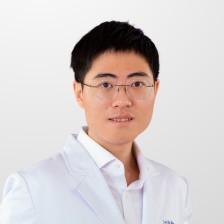
Hei Ming Lai
Institution
The Chinese University of Hong Kong
Country
Hong Kong
Field
Biomedical Sciences
Lai won the 2024 Croucher Tak Wah Mak Innovation Award for leading research in creating a 3D spatial multi-omics platform for clinical diagnostics and spatial biology research.
(Photo: The Chinese University of Hong Kong)
AWARDS
- 2024 Croucher Tak Wah Mak Innovation Award
Related articles

Seeing The World Through Fresh (Zebrafish) Eyes
Using imaging and bioengineering techniques, scientists were able to observe how the eyes develop in live zebrafish embryos.

Where Did The Whale On Pluto Come From?
Researchers reveal that the whale-shaped reddish region along Pluto's equator is likely to have been caused by the same impact that gave rise to Charon.

India’s Carnivores Co-Exist Peacefully
Unlike other big cats elsewhere, tigers and leopards in India live side by side with Asian wild dogs relatively peacefully.

FIT Is The Reason Proteins Make (Female) Flies Full
Consuming proteins triggers the release of FIT, which signals fullness to the brain and prevents the consumption of more proteins.
Diodes Made Ideal With Graphene
Inserting a layer of graphene between the metal and semiconductor components of a diode can prevent atomic intermixing.

New Material Doubles Negative Thermal Expansion Record
Most materials expand when heated; researchers have now found one that contracts by nearly 7 percent instead.

Ancient Post-Apocalyptic World Ruled By Sponges
After extreme climate change wiped out 85 percent of all species, sponges took over and thrived.

Breaching The Brain To Treat Septic Shock
A neuropeptide called orexin has been shown to prevent mice from dying from septic shock.
Searching For Dark Matter With A Donut-Shaped Magnet
Scientists say that donut-shaped magnets can also look for axions, one of the particle candidates for the mysterious dark matter.