


The Asian Scientist 100
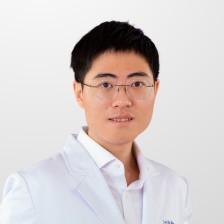
Hei Ming Lai
Institution
The Chinese University of Hong Kong
Country
Hong Kong
Field
Biomedical Sciences
Lai won the 2024 Croucher Tak Wah Mak Innovation Award for leading research in creating a 3D spatial multi-omics platform for clinical diagnostics and spatial biology research.
(Photo: The Chinese University of Hong Kong)
AWARDS
- 2024 Croucher Tak Wah Mak Innovation Award
Related articles

A Dose Of (Virtual) Reality
With virtual reality (VR) and augmented reality (AR) technologies blurring the seams between reality and fantasy, everyone from startups to academia and even NASA wants a slice of the action.
When AI Gets Leaner And Meaner
New AI approaches that require less data and computational power are changing the game for tech giants and startups alike, said speakers at the INSEAD Artificial Intelligence and Machine Learning Festival.
A Virtual Blueprint For Success
It’s not all fun and games with virtual reality—Singapore startup VRcollab is shaking up the construction industry with its VR approach to building design and review.
A Peek At The Brain Through See-Through Skulls
Scientists in China have developed optical clearing agents that can make the skulls of living mice transparent, allowing high resolution imaging of brain structures.

Tech For The 99 Percent
As technological disruption reshapes societies and economies the world over, industry leaders need to consider how technology can be harnessed for the public good, instead of just for a fortunate few.

The Business Of Space
Smaller, cheaper, lighter, leaner. Welcome to the ‘NewSpace’ era, where starting a space tech company doesn’t have to be rocket science.

An AI On The Prize: Zhang Tong of Tencent’s AI Lab
Dr. Zhang Tong, executive director of the Tencent artificial intelligence lab, shares the tech giant’s plans to solve some of the hardest problems in AI today.
21 Female Scientists Who Slay
Having trouble naming an outstanding female scientist? Well, here are 21 to get you started.

Plants And Animals Fix DNA Differently
Unlike animals, the mechanism of DNA repair in plants is skewed towards homologous recombination and involved in their immune response to fungal infections.