


The Asian Scientist 100
Di Li

Institution
National Astronomical Observatories of the Chinese Academy of Sciences
Country
China
Field
Aerospace & Astronomy
Li received the Marcel Grossmann Award for his pioneering contributions in the field of fast radio bursts. Li is the first scientist in China to receive this prize for research conducted within China.
(Photo: The Paper)
AWARDS
- Marcel Grossmann Award
Related articles

Drones Zero In On Himalayan Glaciers
Drones could be a cost-effective and accurate way of studying glaciers in inaccessible Himalayan mountains, deepening our understanding of the impacts of climate change.

How Ice Forms On Salt
Ultrahigh resolution scanning tunnelling microscopy has overturned the decades-old understanding of ice structure based on Bernal-Fowler-Pauling ice rules.

Pets Could Transmit Antibiotic Resistant Bacteria
Think twice before you kiss your family pet. Scientists say that household pets could be a source of antibiotic resistant bacteria.

Pig Whipworm Genome Could Aid Autoimmune Disorders
Understanding the genes which allow the pig parasite Trichuris suis to modify the human immune response could result in better treatments for autoimmune disease.

Cosmic Explosions Shrouded In Dust
By detecting radio waves from molecular gas, scientists have found that galaxies hosting bright and explosive gamma ray bursts have high proportions of dust.

Daily Drives Linked To Poor Health
A study has identified driving as a risk factor for poor health behaviors and outcomes such as smoking, obesity and insufficient sleep.
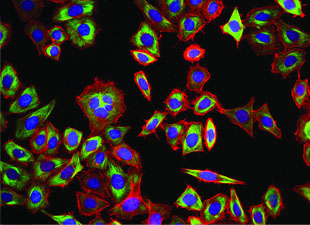
Indian Plant Compound Could Play Role In Cancer Cell Death
Gedunin, an extract of the Indian neem tree that has been used for centuries in Asia as a natural remedy to treat inflammation, fever, and malaria, may also be used to help kill cancer cells.

Blocking STAT5 To Fight Leukemia
Blocking STAT5 in conjunction with standard tyrosine kinase inhibitor drugs could be a powerful one-two punch that kills leukemic cells.

Unlocking Eucalyptus’ Potential For Oil And Paper
Understanding the Eucalyptus genome could improve the oil producing characteristics and pest resistance of the world's most widely planted hardwood.