


The Asian Scientist 100
Di Li

Institution
National Astronomical Observatories of the Chinese Academy of Sciences
Country
China
Field
Aerospace & Astronomy
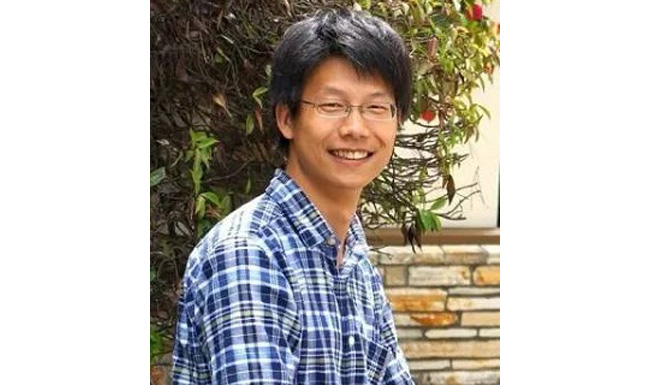
Li received the Marcel Grossmann Award for his pioneering contributions in the field of fast radio bursts. Li is the first scientist in China to receive this prize for research conducted within China.
(Photo: The Paper)
AWARDS
- Marcel Grossmann Award
Related articles

Treating Water Using The Rules Of (Magnetic) Attraction
Using magnetic fields, researchers are able to analyze the amount of metal particles in tap water during water treatment processes.

Intrusive Parents Breed Self-Critical Kids
Children with intrusive parents had high or increased levels of self-criticalness and greater risk of depression and anxiety.

Genome Instability May Be Linked To Schizophrenia
Researchers have identified significantly more DNA sequence repeats in patients with schizophrenia than in control individuals.
Chinese Particle Physicist Wins Young Scientist Award For Neutrino Discovery
Particle physicist Wen Liangjun has won IUPAP's 2016 Young Scientist Award for his role in the discovery of the non-zero neutrino mixing angle θ13.

How Culture Shapes Our Behaviour
Research by SMU Assistant Professor Cheng Chi-Ying is unlocking how our cultural identity shapes our lives and attitudes, even at a subconscious level.

Reinventing Retail
To maximise their bottom line, online retailers must integrate digital business data with physical product flow, according to SMU Associate Professor Lim Yun Fong.

Drones, Drugs And The Death Penalty
Fears that recreational drones could be used for spying or terrorism are based on little more than paranoia, SMU Assistant Professor Chen Siyuan’s research shows.

Exposure To Industrial Printing Chemical Raises Risk Of Bile Duct Cancer
1,2-dichloropropane, a chemical used in the printing industry, turns carcinogenic when it is metabolized by the liver and excreted into bile.

Natural Progesterone May Help Breast Cancer Treatment: Study
Adding natural or biologically identical forms of progesterone, instead of synthetic forms, to standard breast cancer treatments could prolong life for patients, researchers have found.