


The Asian Scientist 100
Di Li
Institution
National Astronomical Observatories of the Chinese Academy of Sciences
Country
China
Field
Aerospace & Astronomy
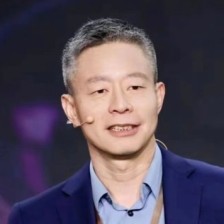
Li received the Marcel Grossmann Award for his pioneering contributions in the field of fast radio bursts. Li is the first scientist in China to receive this prize for research conducted within China.
(Photo: The Paper)
AWARDS
- Marcel Grossmann Award
Related articles

Keeping A Finger On The Pulse Of Healthcare
Low-cost hardware, combined with wireless technology and state-of-the-art cloud apps, will transform the business of healthcare, says Renew Group CEO Ravinder Sajwan.

SGInnovate To Launch Singapore Into AI & Robotics Space
SGInnovate will focus on areas such as artificial intelligence, robotics, digital health, financial services, smart energy, digital manufacturing and transportation.

Is This Town Big Enough?
What does Singapore’s recent push towards deep technology mean for the country’s more mature life sciences sector?
Building Deep Tech Companies At SGInnovate
SGInnovate, Entrepreneur First and the Singapore-MIT Alliance for Research and Technology Innovation Centre are working together to find and nurture Singapore’s next generation of entrepreneurs.

A Deep Dive Into Water Management Reform
Cooperation between governments and farmers is essential for irrigation policy and water management in Southeast Asia, says SMU Assistant Professor Jacob Ricks.

Systematically Taming The Complexity Of Cancer
By combining biological experiments with supercomputing simulations, scientists have devised a method to identify optimal drug targets for a range of cancers.

Aptamers To Help Reduce Chemotherapy Side Effects
Researchers in Hong Kong have combined aptamers with anticancer drugs to specifically target ovarian cancer cells.

How Fusion Genes Lead To Leukemia
Researchers in Japan have identified a recurring fusion gene associated with poor prognosis in pediatric T-cell lymphoblastic leukemia.

Two Letters Added To The Genetic Alphabet
Scientists have determined the structures of two artificial DNA bases, Ds and Px, which have expanded the genetic code.