


The Asian Scientist 100
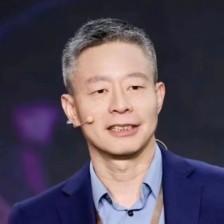
Di Li
Institution
National Astronomical Observatories of the Chinese Academy of Sciences
Country
China
Field
Aerospace & Astronomy
Li received the Marcel Grossmann Award for his pioneering contributions in the field of fast radio bursts. Li is the first scientist in China to receive this prize for research conducted within China.
(Photo: The Paper)
AWARDS
- Marcel Grossmann Award
Related articles
The Ocean Is Starting To Boil
Over the hundred years that they have been used, floating-point numbers have become so entrenched that replacing them would be like “boiling the ocean.” But Dr. John Gustafson believes he has done just that.

High Performance Healthcare
Thanks to all the data that is already available, the healthcare sector is ripe for a data-driven transformation. Here’s how supercomputers can make a difference.

When T Spells Trouble For Cancer
The world’s largest clinical trial of T-cells for cancer is being conducted by a Singapore-based biotech company, Tessa Therapeutics. Sim Shuzhen finds out more.

AI On Cloud Nine
The convergence of artificial intelligence and cloud computing is underway. Alibaba Cloud’s Dr. Min Wanli shares his insights on this revolution.
Forging New Paths In Cancer Diagnostics
HistoIndex is partnering with the University of Malaya and Pathomics Health to roll out an integrative diagnostics platform for the holistic analysis of patient tumor biopsies.

China’s Tianhe-2 Supercomputer Ranked World’s Fastest
A supercomputer developed by Chinese researchers has been named the world's fastest.

Trace Metals Improve Fuel Cell Stability
Scientists in South Korea have used doped electrode materials with small amounts of metal to improve the chemical stability of fuel cells.

A Lego-Brick Approach To Creating Molecular Wires
Using a dynamic ligand to string together copper atoms one at a time, researchers in Japan have managed to build molecular copper wires of varying lengths.

Harnessing Sunlight To Generate Hydrogen Fuel
Researchers in Japan have developed a nanostructured catalyst that absorbs sunlight to split water, thus producing hydrogen fuel.