


The Asian Scientist 100
Di Li

Institution
National Astronomical Observatories of the Chinese Academy of Sciences
Country
China
Field
Aerospace & Astronomy
Li received the Marcel Grossmann Award for his pioneering contributions in the field of fast radio bursts. Li is the first scientist in China to receive this prize for research conducted within China.
(Photo: The Paper)
AWARDS
- Marcel Grossmann Award
Related articles

Polarized Light Guides Honeybees To Honey Source
Honeybees use the pattern of polarized light in the sky, invisible to humans, to direct one another to a honey source, according to a study.

Bees Use Hidden Patterns In Flowers
Scientists have shown that bees can use polarisation patterns to identify flowers and improve foraging efficiency, but only if the flowers face downwards.

Honeybee Hive Sealant Stimulates Hair Growth
Honeybee propolis treatment encourages hair growth in mice that have been shaved or waxed.

Life Goes On For Queenless Bees
What happens when queenless bees have to forage for food and produce new bees at the same time? Researchers find that they adapt and change with their environment.

Bees Remain Altruistic When The Queen Dies
A new study has shown that honeybees show remarkable altruism towards their colony even when faced with the collapse of their colony.

Asia’s Bee Mites Alarmingly Resistant
A study of the Tropilaelaps mercedesae genome has revealed that conventional mite control strategies might not work.

How Plants Control Honeybee Caste Development
Plant miRNAs from pollen can delay caste differentiation and keep ovaries inactive in honeybee larvae, thereby producing sterile worker bees.
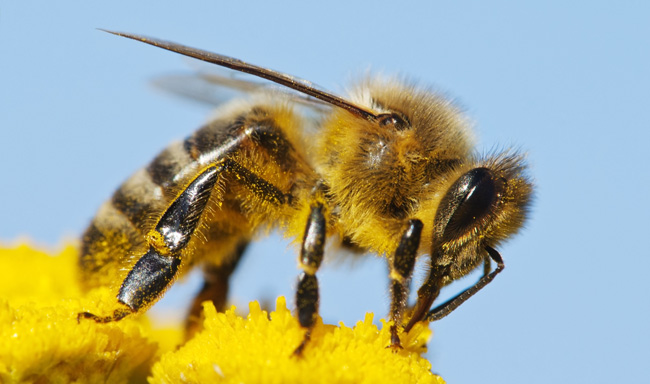
Yes, Bees Get Sexually Transmitted Diseases Too
And when they do get a sexually transmitted disease, the bees' immune system launches an efficient response to protect their sperm—and ultimately their queen—against the disease.

Bees Do It, Drones Do it
No longer the stuff of science fiction and TV series, drones now can pollinate flowers.