


The Asian Scientist 100
Di Li

Institution
National Astronomical Observatories of the Chinese Academy of Sciences
Country
China
Field
Aerospace & Astronomy
Li received the Marcel Grossmann Award for his pioneering contributions in the field of fast radio bursts. Li is the first scientist in China to receive this prize for research conducted within China.
(Photo: The Paper)
AWARDS
- Marcel Grossmann Award
Related articles

120 Million-Year-Old Pregnant Lizard Fossil Discovered In China
Scientists have discovered a 120 million-year-old pregnant fossil.

Chinese Researchers Say Archaeopteryx Is Not “Original Bird”
New research by Chinese scientists has thrown the winged Archaeopteryx off the evolutionary pedestal as the case study for evolution from dinosaur to bird.

Australia & India Establish Joint Education Council
During the Annual India-Australia Ministerial Dialogue on Education Cooperation, India and Australia announced the launching of the India-Australia education council to strengthen bilateral ties.
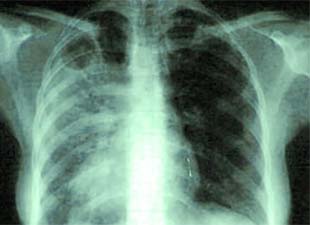
Delhi Scientists Work Towards A Urine Test For Tuberculosis
New Delhi scientists are reporting an advance toward a fast, inexpensive urine test to detect tuberculosis, which is on a rampage in the developing world.

In Termites, Worker-To-Soldier Transformation Requires Cell Death
A Japanese study demonstrates the dramatic changes and trade-off between development of defensive organs and regression of mouth parts during termite caste differentiation.

UNICEF: Lack Of Optimal Breast Feeding In Developing Countries
Exclusive breastfeeding for the first six months of a baby's life can help bring down infant mortality rates and stunting in the developing world, say pediatricians and the UNICEF.

WHO: Over 71 Million Children In Asia Are Underweight
The failure to address the problem of malnutrition in the Asia Pacific may lead to dire social and economic consequences, warns the WHO.

Microsoft Research Asia Takes Facial Recognition Software A “Nose” Forward
Researchers from Microsoft Research Asia have developed a new approach for acquiring high-fidelity 3D facial performances, complete with realistic dynamic wrinkles and fine facial details.

Astronomers Witness Star Destroyed By Super Massive Black Hole
An international team of astronomers has observed a star being literally torn apart after it had strayed too close to a super massive black hole.