


The Asian Scientist 100
Di Li

Institution
National Astronomical Observatories of the Chinese Academy of Sciences
Country
China
Field
Aerospace & Astronomy
Li received the Marcel Grossmann Award for his pioneering contributions in the field of fast radio bursts. Li is the first scientist in China to receive this prize for research conducted within China.
(Photo: The Paper)
AWARDS
- Marcel Grossmann Award
Related articles

Tackling Obesity By Targeting Brain Cells
By inhibiting a protein called TSPO in specific cells of the brain, researchers in South Korea have found a way to induce weight loss in mice.

Gut Bacteria That Brew Booze May Cause Liver Damage
A research group in China has found that alcohol-producing gut bacteria could cause liver damage even in people who don’t drink.

Asia’s Rising Scientists: Anjan Soumyanarayanan
Bringing together expertise in quantitative microscopy, electrical measurements and materials science, Dr. Anjan Soumyanarayanan is putting his own spin on nanoelectronics.
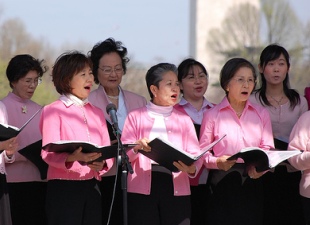
Choir Singing Synchronizes Heart Beats
A new study on how music affects our body and our health has found that when people sing in a choir, their heart beats become synchronized.

U.S. Doctors Fight Air Pollution In Mongolia’s Capital
A team of doctors from the U.S. is fighting air pollution and lung disease in Mongolia's capital city, Ulaanbaatar, whose air quality is among the worst in the world.

Vega’s Lift-Off A Milestone For Arianespace, ASEAN Director Says
Asian Scientist Magazine chats with Arianespace’s ASEAN Director about Vega's maiden launch, potential competition from U.S. start-up SpaceX, and the company's plans for the Asian market.

Top U.S. Science Official, Subra Suresh, Steps Down As NSF Director
Subra Suresh, former director of the National Science Foundation, has been named as the next president of Carnegie Mellon University.

5 Health Myths, Debunked!
Remember all those times you were given dubious health advice? Here are five health myths that we hope to debunk with empirical evidence from scientific studies.

Science & Tech Leaders Discuss Cohesion In ASEAN
At a recent ASEAN meeting in Indonesia, science & technology delegates convened to discuss new initiatives across the region.