


The Asian Scientist 100
Di Li

Institution
National Astronomical Observatories of the Chinese Academy of Sciences
Country
China
Field
Aerospace & Astronomy
Li received the Marcel Grossmann Award for his pioneering contributions in the field of fast radio bursts. Li is the first scientist in China to receive this prize for research conducted within China.
(Photo: The Paper)
AWARDS
- Marcel Grossmann Award
Related articles

Clinical Trial To Test If Vitamin D Can Prevent Multiple Sclerosis
A new clinical trial set to take place in Australia and New Zealand will test whether vitamin D can prevent multiple sclerosis in those at risk of developing the disease.
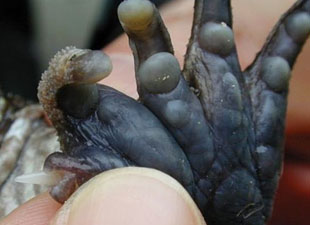
Japanese Fighting Frogs Use ‘Wolverine Claw’ During Combat
A Japanese scientist has discovered a rare breed of frog which has combat-ready retractable spikes that shoot from its fingers.

Japan’s Lake Suigetsu Provides 52,800-Yr Archaeological Clock
A new series of radiocarbon measurements from Japan's Lake Suigetsu has provided an exquisitely preserved record of the past 52,800 years.

Earth Was Too Hot After Mass Extinction 250 Million Years Ago
Scientists have discovered why the ‘broken world’ following the worst extinction of all time lasted so long – it was simply too hot to survive.

Chinese Academy Of Sciences, Uni. Of Leeds Open Joint Research Institute
The University of Leeds and the Chinese Academy of Sciences have established a joint research institute to develop next generation energy storage systems.

World’s 25 Most Endangered Primates Revealed In IUCN Report
The world’s 25 most endangered primates have been revealed in a new report released on Monday at the UN’s Convention on Biological Diversity COP11.

Extending Einstein’s Theory Beyond The Speed Of Light
Applied mathematicians in Australia have extended Einstein's theory of special relativity to work beyond the speed of light.
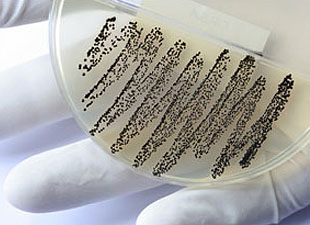
Specialized Immune Cells Use Vitamin B To Recognize Infection
Researchers have discovered how specialized immune cells recognize products of vitamin B synthesis that are unique to bacteria and yeast, triggering the body to fight infection.

Study: Oil Palm Plantations Wiping Out Tropical Forests In Borneo
Expanding production of palm oil in Indonesia is driving rainforest destruction and massive carbon dioxide emissions, according to a new study.