


The Asian Scientist 100
Di Li
Institution
National Astronomical Observatories of the Chinese Academy of Sciences
Country
China
Field
Aerospace & Astronomy
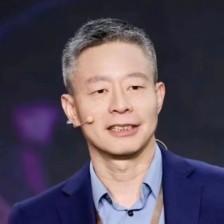
Li received the Marcel Grossmann Award for his pioneering contributions in the field of fast radio bursts. Li is the first scientist in China to receive this prize for research conducted within China.
(Photo: The Paper)
AWARDS
- Marcel Grossmann Award
Related articles

Scientists Find Gene For Hereditary Epilepsy
Researchers have tracked a hereditary gene responsible for a common form of epilepsy known as focal or partial epilepsy.

Sing-Song Cantonese Language Helps Musicality, Study
Non-musicians who speak tonal languages such as Cantonese may have a better ear for learning musical notes, says a new study.

How Do We Feed India’s Population In 2050?
The average Indian consumes only 2,300 calories per day - below the poverty level of 2,400 calories a day. The trend in recent years is for Indians to eat even less, writes Ranjit Goswami.

China To Launch Earth Observation Satellite This Month
China is planning to launch a high-resolution Earth observation satellite this month.
Astellas, Ambryx Sign US$300 Million Antibody Drug Conjugate Deal
Astellas Pharma Inc. on Thursday entered into a collaboration with Ambrx Inc. for the discovery and development of novel antibody drug conjugates.
Melbourne Uni Opens Center For Contemporary Chinese Studies
The University of Melbourne has launched The Center for Contemporary Chinese Studies to focus on research into contemporary issues in China.

Climate Science Is Not About ‘Belief’: Australia Chief Scientist
Australia’s Chief Scientist Ian Chubb says secondary school children should be taught to distinguish between belief and evidence when it comes to climate change.
Chief Scientist Releases Plan For Australia’s Research
Chief Scientist Ian Chubb has launched the National Research Investment Plan, which sets new guidelines for Australian research investment.

Adaptive Licensing To Speed Up Drug Approvals In Singapore
Singapore's health regulatory agency is implementing a new drug development regulatory model to accelerate the translation of drugs into the clinic.