


The Asian Scientist 100
Can Li

Institution
University of Hong Kong
Country
Hong Kong
Field
Engineering
Li is a recipient of the 2023 Croucher Tak Wah Mak Innovation Award for his research exploring the limitations of digital computers in performing tasks accomplished by the human brain, including recognising faces, reasoning based on vague information, and learning from experience.
(Photo: University of Hong Kong)
AWARDS
- 2023 Croucher Tak Wah Mak Innovation Award
Related articles

How Stem Cells Exit From Pluripotency
Using a genome-wide screening approach, scientists from Singapore identified novel regulators of human stem cells differentiation.
The Fruit Fly May Know It’s Bugging You
A ‘virtual reality’ experiment done on flies has shown that their brains register the difference between their own actions and external stimuli.
Nanoparticles Self-Assemble Into ‘Black Gold’
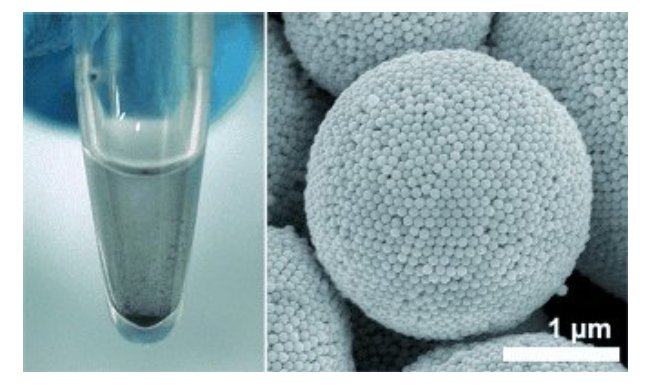
When nano-sized gold spheres self-assemble into more complex 3D structures, they turn from their characteristic brick red to black.

Mapping Out The Ligand-Receptor Network
Autocrine signaling may be more common than previously thought, according to the first large-scale map of communication between over 140 different cell types.

The Quantum Behavior Of Mini-Magnets
The demonstration of coherent coupling between a ferromagnetic magnon and a superconducting qubit paves the way for advances in quantum information processing.

Dark Matter Déjà-Vu
Although no one has ever directly observed it, dark matter has been shown to bear a striking resemblance to pions, a more familiar type of subatomic particle.

Taking A Stand Against Sitting
Are you sitting down? You might want to take a little walk after reading this article.

Increased Anxiety Associated With Sitting Down
A meta-analysis has revealed that sedentary activities are associated with mental health conditions such as anxiety.

Sitting Down For Too Long Linked To Chronic Disease, Study
A new study has linked sitting down for more than four hours of each day to chronic disease such as cancer, diabetes, heart disease, and high blood pressure.