


The Asian Scientist 100
Can Li

Institution
University of Hong Kong
Country
Hong Kong
Field
Engineering
Li is a recipient of the 2023 Croucher Tak Wah Mak Innovation Award for his research exploring the limitations of digital computers in performing tasks accomplished by the human brain, including recognising faces, reasoning based on vague information, and learning from experience.
(Photo: University of Hong Kong)
AWARDS
- 2023 Croucher Tak Wah Mak Innovation Award
Related articles

For Synthetic Biological Circuits, Two Is Better Than One
A two-strain microbial circuit can effectively mimic the population-level oscillations of more complex biological systems.

Where Did Saturn’s F Ring And Shepherd Satellites Come From?
Using computer simulations, scientists have found that collision of satellites drove the formation of Saturn's F ring and shepherd satellites.

Get A Single Cell’s Metabolome In Minutes
Using single cell mass spectrometry, scientists now can sneak a peek at the molecular profile of individual plant cells.

Food Fortification Could Avert A Million Deaths, Experts Say
Joint partnerships between public and private sector in food fortification could help meet national health and social needs.

Is Burning Incense Worse Than Smoking Cigarettes?
By analyzing components of burning smoke from incense and cigarettes, scientists have found that burning incense may release more toxic compounds than previously known.
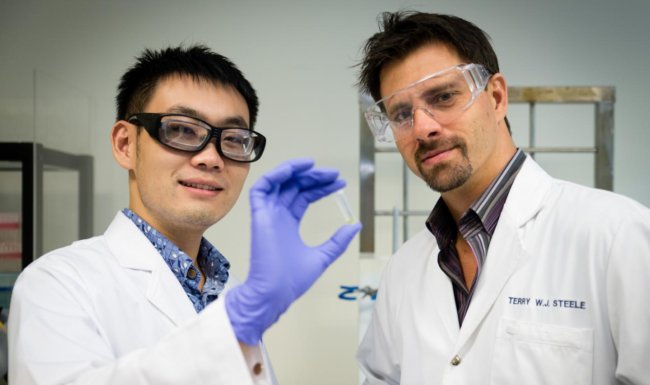
Voltaglue: An Electrifying Solution To A Sticky Problem
A glue that can harden in wet conditions when a voltage is applied to it could be used in surgeries or underwater metal repair work.

A Fail-Safe Suicide Switch For iPSC Cancer Therapy
By introducing the suicide gene iCaspase-9 into induced pluripotent stem cells, scientists are now able to prevent the formation of tumors should the cells go rogue.

Helping Rice And Tomato Plants Take The Heat
The receptor-like kinase ERECTA could help improve the heat resistance of key commercial crops such as rice and tomatoes.

A New Way To Look At Embryos
A non-invasive imaging technique that allows the visualization of developing embryos has changed our understanding of the earliest stages of life.