


The Asian Scientist 100
Can Li

Institution
University of Hong Kong
Country
Hong Kong
Field
Engineering
Li is a recipient of the 2023 Croucher Tak Wah Mak Innovation Award for his research exploring the limitations of digital computers in performing tasks accomplished by the human brain, including recognising faces, reasoning based on vague information, and learning from experience.
(Photo: University of Hong Kong)
AWARDS
- 2023 Croucher Tak Wah Mak Innovation Award
Related articles

Eight Seriously Cool (And Weird) Technologies From The Rekimoto Lab (VIDEO)
Here are eight futuristic technologies that have been turned into reality by Professor Jun Rekimoto of the University of Tokyo.

7 Bizarre Deep Sea Creatures Discovered In Indonesian Waters
Scientists from the South Java Deep Sea Biodiversity Expedition 2018 have released preliminary findings from their 14-day exploration of the deep sea off the coast of West Java.

7 Must-Read Stories In March 2018
Public trust, a romantic lab and how vitamin C could help treat multiple sclerosis were among the hottest topics in March.

An Evolutionary Trade-Off For Walking Upright
A research group in Japan has revealed that walking upright has made humans more prone to limb ischemia than mice.

Gene-Edited Pigs Better Model Huntington’s Disease
Using the CRISPR/Cas9 gene editing system, researchers have developed a pig model of Huntington’s disease that better mimics how the disease progresses in humans.

Flexible And Waterproof Batteries To Power Wearable Devices
By twisting carbon nanotube fibers into a yarn, scientists in China have developed a waterproof zinc-ion battery that can be knitted and stretched.

Generating Electricity With The Flick Of The Wrist
Scientists in China have found a way to produce electricity from slight body movements, such as bending a finger or rotating the wrist.
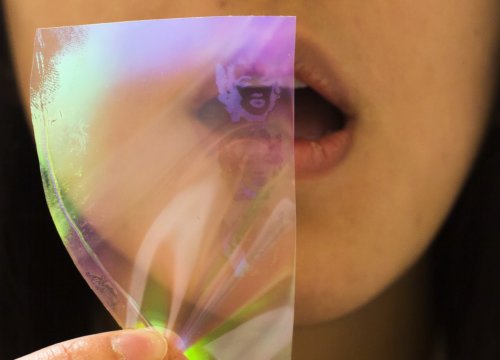
Fighting Counterfeits With Nanopillars
The moisture from a breath of air reveals hidden patterns in a nanopillar-structured material.

Umbrella-Shaped Nanodiamonds Shine Five Times Brighter
Umbrella-shaped, luminescent nanostructures may be useful in highly sensitive magnetic sensors or within the realm of quantum computing.