


The Asian Scientist 100
Can Li

Institution
University of Hong Kong
Country
Hong Kong
Field
Engineering
Li is a recipient of the 2023 Croucher Tak Wah Mak Innovation Award for his research exploring the limitations of digital computers in performing tasks accomplished by the human brain, including recognising faces, reasoning based on vague information, and learning from experience.
(Photo: University of Hong Kong)
AWARDS
- 2023 Croucher Tak Wah Mak Innovation Award
Related articles

World’s First Mice Born To Same-Sex Parents
Chinese scientists have created mouse pups with same-sex parents using haploid embryonic stem cells and gene editing.

Perovskite Capable Of Efficient Light-To-Electricity Conversion
Scientists have found that perovskites exhibit the carrier multiplication effect which allows them to turn light into electrical energy efficiently.

Hydrogen Bonds Help Gels Heal Themselves
Scientists in Japan have developed an ion gel that relies on hydrogen bonding to heal itself rapidly at room temperature.

Honey, I Shrunk The Particle Accelerator
By sending a beam of particles through plasma, researchers were able to accelerate those particles efficiently without large equipment like the Large Hadron Collider.
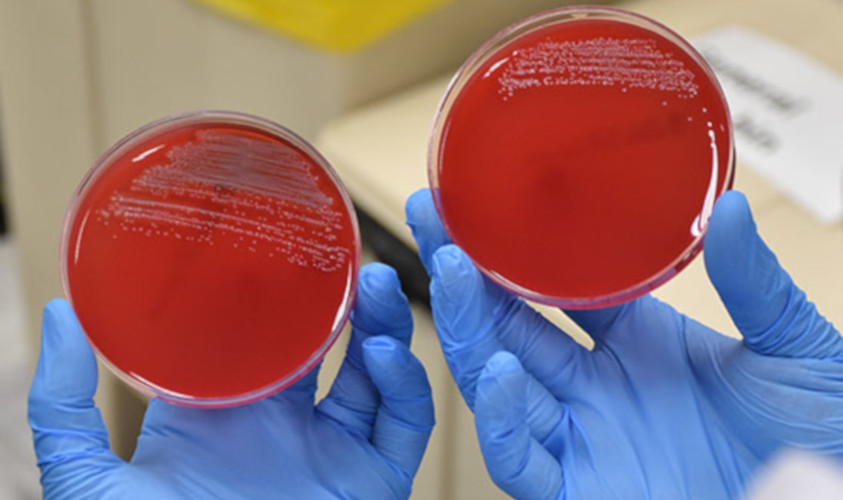
Viruses Supercharge Superbug Evolution
Viruses can transfer large chunks of bacterial genomes—including antibiotic resistance genes—among bacteria species.

Ion-Based AI Makes Smart Decisions
A research group in Japan has invented an ionic device that can make decisions based on electrochemical phenomena.

WuXi AppTec Launches Drug Screening Library
The DNA-Encoded Library platform consists of 80 billion unique molecules which are structurally diverse and chemically exclusive.

Skin Hardness A Better Measure Of Body Temperature
Scientists in South Korea have found that human body temperature can be better estimated by measuring skin hardness in addition to skin temperature and sweat rate.

Discoverer Of GFP Osamu Shimomura Dies At 90 (In Memoriam)
Professor Osamu Shimomura’s discovery of green fluorescent protein in 1962 continues to shed light on the biomolecular pathways of biology.