


The Asian Scientist 100
Yu Min

Academician
Institution
Chinese Academy of Sciences
Country
China
Field
Physics
Yu was given the 2014 National Highest Science and Technology Award, China’s top science award, for his research into hydrogen bombs.
(Photo: Peking University)
Related articles

Quality Education Still A Long Way Off In Pakistan
Despite making education a constitutional right in 2010, Pakistan is unlikely to fulfill its Millennium Development Goal of achieving universal education by 2015.
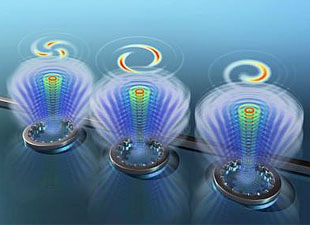
Twisted Light At The Single Photon Level
Researchers have demonstrated that light in tiny integrated arrays of emitters does not propagate in straight rays, contradicting traditional concepts in physics.

Chinese Academy Of Sciences, Uni. Of Leeds Open Joint Research Institute
The University of Leeds and the Chinese Academy of Sciences have established a joint research institute to develop next generation energy storage systems.
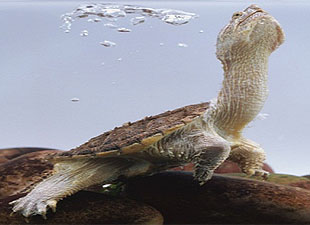
Chinese Soft-Shelled Turtles Urinate Through Their Mouths
Scientists in Singapore have discovered that soft-shelled turtles excrete waste urea through gill-like projections in their mouths.

Mushroom Compound May Help Dogs With Invasive Cancer
A mushroom compound may help dogs with cancer survive longer than without treatment, offering pet owners an alternative to chemotherapy for their pooches.

Who’s The Fairest Of Them All?
Skin-lightening cosmetics are all the rage in Asia. What’s the science behind them and could they be doing more harm than good?

Tibet Has Cleanest Air On Earth, Study
A new study has found that Tibetans around the sacred Nam Co Lake in Tibet breathe in almost perfectly clean air.
Spread Of Genes From GM Rice ‘Unavoidable But Slow’
The spread of genes from genetically modified crops to neighboring wild plants may not happen as quickly as feared, according to a study conducted in Chinese rice fields.
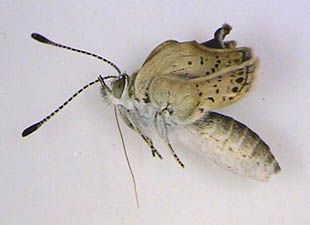
Fukushima Disaster Caused Mutant Butterflies, Study
Japanese researchers have found mutations in butterflies in the Fukushima region, signaling early changes to the local ecosystem after the March 2011 disaster.