


The Asian Scientist 100
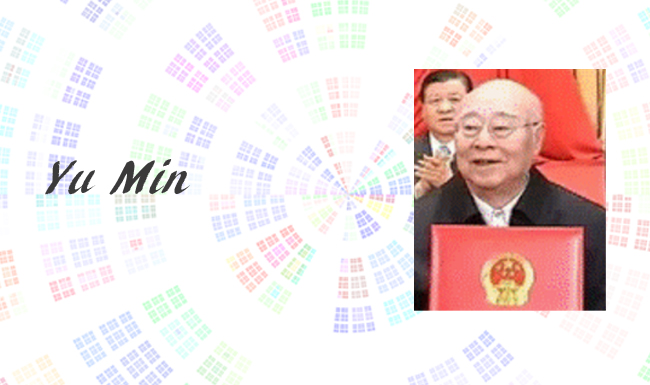
Yu Min
Academician
Institution
Chinese Academy of Sciences
Country
China
Field
Physics
Yu was given the 2014 National Highest Science and Technology Award, China’s top science award, for his research into hydrogen bombs.
(Photo: Peking University)
Related articles
Rice Or Wheat? Crop Choice Could Influence Collectivism
Scientists suggest that growing the more labor-intensive crop of rice has led Southern Chinese to be more collectivist than their Northern wheat-growing counterparts.

How Cells Read Ubiquitination
Research by Taiwanese scientists reveals the role of K33 ubiquitination in protein trafficking.

Samsung Researchers Develop Method For Large-Scale Graphene Production
Armed with a new method of synthesis which facilitates large scale production, Samsung could use graphene in place of silicon for semiconductors in the future.

Finger Length A Pointer To Knee Problems
The smaller the difference between the length of your ring and index fingers, the higher your chance of knee replacement in old age, according to a study.
Making Clothes From Sugar
Researchers have found a green and efficient method to produce the raw materials for nylon from sugar.

Targeting The Achilles Heel Of Cancer Cells
By targeting proteins only expressed in cancer cells and reducing drug toxicity, scientists hope to be able to fight cancer better.

Stem Cells From A Single Drop Of Blood
Singaporean scientists have developed a method for generating stem cells that only requires a single drop of blood.
Wang Yu Named Vice President Of Academia Sinica
Academician Wang Yu has been appointed Vice President (Division of Mathematics and Physical Sciences) of Academia Sinica.

Chinese Scientist Proposes Spraying Water Into The Air To Curb Pollution
Spraying water into the atmosphere from sprinklers atop tall buildings and towers could cut back on air pollution, according to a scientist.