


The Asian Scientist 100
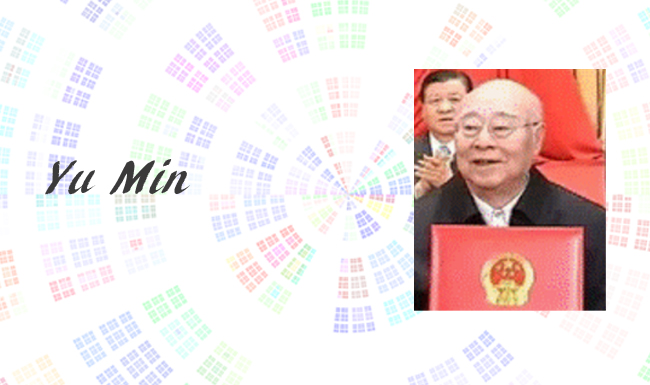
Yu Min
Academician
Institution
Chinese Academy of Sciences
Country
China
Field
Physics
Yu was given the 2014 National Highest Science and Technology Award, China’s top science award, for his research into hydrogen bombs.
(Photo: Peking University)
Related articles
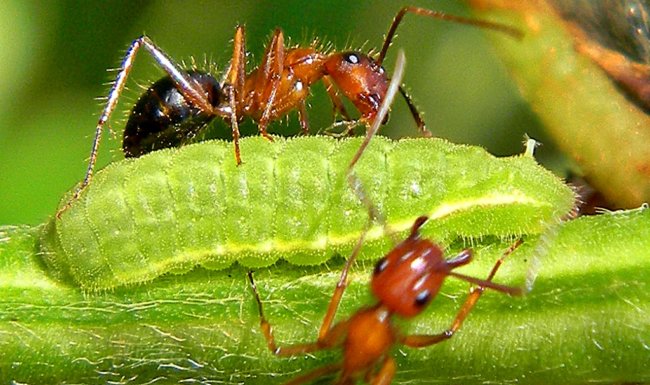
How Butterfly Larvae Manipulate Their Ant Attendants
Lycaenid butterflies secretes nutritious and mind altering nectar to keep attendant ants close by for protection.

Shedding Light On A Sneaky Soil Parasite
An interdisciplinary team of researchers has developed a fluorescent molecule that can visualize germination of the parasitic plant, witchweed.

Asian Scientist Writing Prize Winners Announced
A total of 24 winners received their prizes at the inaugural Asian Scientist Writing Prize 2015 held at the Science Centre Singapore.

Black Phosphorus For Tunable Transistors
By tweaking the thickness of black phosphorus or its contact metal, researchers can modify its semiconducting properties without doping.
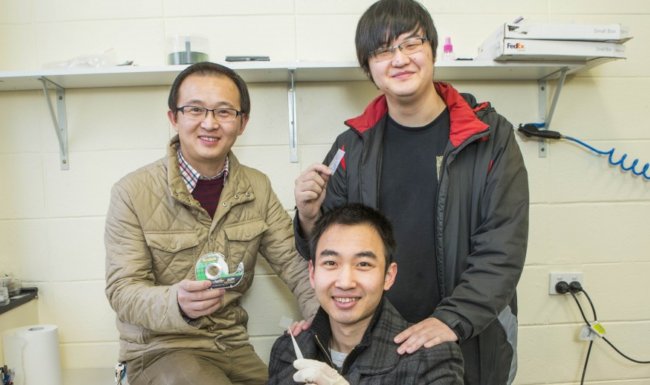
Sticky Tape Used To Create Semiconductor Monolayers
As a semiconductor material, phosphorene is lighter and thinner than silicon, opening up the possibility of interesting new devices.
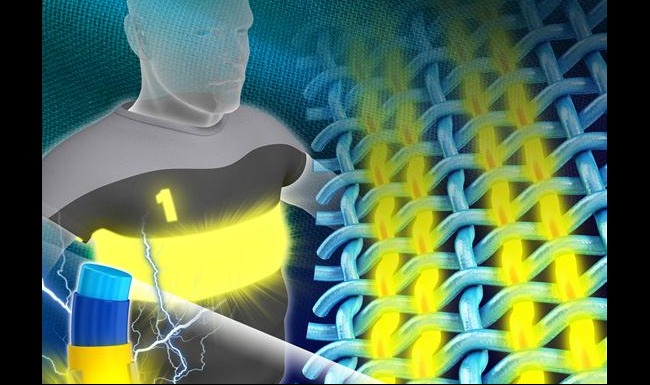
Fiber-Like Polymer LEDs Developed
Dip coating could help make wearable polymer LEDs much cheaper to manufacture, scientists say.

Competition Between Synapses Shapes Brain Circuitry
Brain plasticity, essential for learning and memory, is controlled by competition for a limited protein resource.

Insect-Inspired Robots Hop On Water
By studying how water striders do it, researchers have designed a robot that uses surface tension to walk on water.

A Crystal-Clear View Of DNA Unwinding
Thirty years after the MCM2-7 complex was first linked to DNA replication, scientists have finally solved its structure.