


The Asian Scientist 100
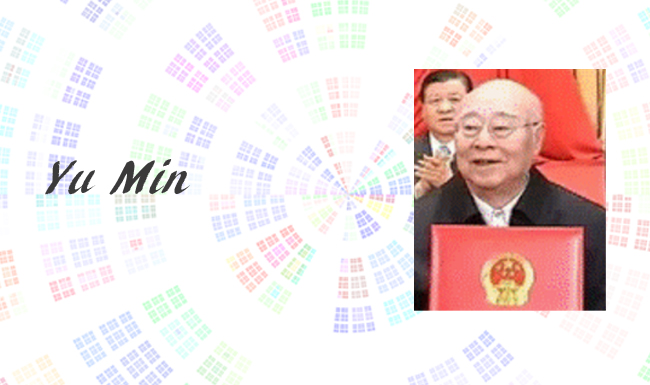
Yu Min
Academician
Institution
Chinese Academy of Sciences
Country
China
Field
Physics
Yu was given the 2014 National Highest Science and Technology Award, China’s top science award, for his research into hydrogen bombs.
(Photo: Peking University)
Related articles

The Women Of The Asian Scientist 100 (VIDEO)
From the co-discoverer of carbon nanotubes to the first Chinese woman to win a Nobel Prize, here are the 15 female scientists featured on the AS100 list.

Tourist Swarms Raise The Temperature
During the peak tourist season, temperatures in Sanya City can be 0.4-0.7 °C higher than normal, study says.

Need A New Kidney? Let’s Regenerate One!
Under the correct conditions, kidney progenitor cells can be induced to produce more glomeruli and tubules, the building blocks of the kidney.

Monash & Takeda Take On Gastrointestinal Disease
The research alliance between Monash and Takeda will investigate nano-medicine for gastrointestinal diseases, among other projects.

Fast Or Slow, It Was Already Decided Before ‘Go’
Research suggests that runners’ neural activity just before the start of a race can predict miniscule variations in reaction times.

A Supernova Origin That’s Simply Extraordinary
Decades of debate and researchers still don’t agree on the origin of extraordinary supernovae. Now, we may have evidence for one popular theory.

Fast-Acting Antimicrobial Kills E. Coli In Seconds
Potential applications for the antimicrobial material include consumer and personal care products.

Vibrating Male Fiddler Crabs Shake It Up For Love
To lure females into their burrows, male fiddler crabs produce vibrations that indicate their suitability as a mate.
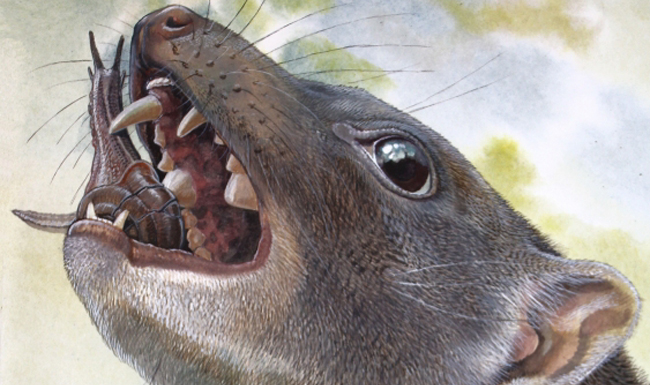
Ancient Marsupial Enjoyed Eating Escargot
Researchers have discovered the fossil remains of carnivorous Australian marsupials that ate snails and lived 15 million years ago.