


The Asian Scientist 100
Yu Min
Academician
Institution
Chinese Academy of Sciences
Country
China
Field
Physics
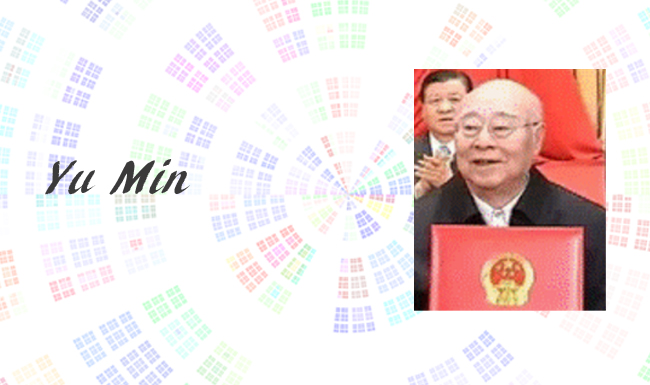
Yu was given the 2014 National Highest Science and Technology Award, China’s top science award, for his research into hydrogen bombs.
(Photo: Peking University)
Related articles

Singapore: A Sentinel For Southeast Asian Seafood Safety (VIDEO)
What we learnt from the unprecedented 2015 GBS outbreak and its implications for food safety in Southeast Asia.

Smart Window Tunes Light Intensity And Filters Air
Scientists in China have developed a silver-nylon mesh which can be used as a smart window to regulate indoor light intensity and reduce exposure to air pollution.

‘So You Want To Be a Doctor’ Medical Seminar Is Back!
Nine doctors from diverse career paths will share how to prepare for the future in the next Wildype Media Group’s ‘So You Want To Be A Doctor’ seminar.

Finding The Right Pair Of Antibiotics To Fight Resistant Bacteria
An on-chip screening method allowed scientists in South Korea to identify synergistic pairs of antibiotics for treating stubborn infections.

Designing A Better Fire Extinguisher For Space
Rather than spray carbon dioxide to put out fires, a fire extinguisher developed by scientists in Japan relies on a powerful vacuum.

Eminent Scientists From India Among 2019 Royal Society Fellows
Virologist Dr. Gagandeep Kang and pharmaceutical company Cipla chairperson Dr. Yusuf Hamied are among this year’s roster of Royal Society Fellows.

Clothes As Display Screens? Scientists Are Working On It
Researchers in South Korea have found a way to protect polymer solar cells and organic light emitting diodes from moisture, paving the way for wearable, washable displays.
Asia’s Scientific Trailblazers: Lee Sang Yup
By tweaking the metabolic pathways of living organisms, Professor Lee Sang Yup is maximizing the synergy between biology and chemistry for the benefit of industry and society.
Tiny Ultrasound Device Stimulates Mouse’s Brain
Using a lightweight capacitive micromachined ultrasonic transducer, researchers in South Korea were able to noninvasively stimulate the mouse brain to a depth of three to four millimeters.