


The Asian Scientist 100
Yang Ke
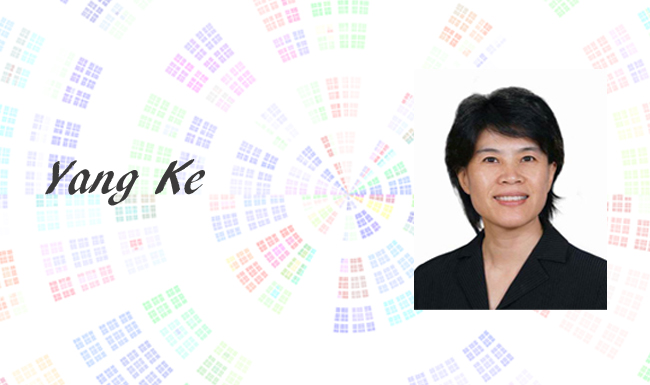
Executive Vice President
Institution
Peking University
Country
China
Field
Leadership
Yang, the executive vice president of Peking University, won the 2015 Prince Mahidol Award for reforming research and medical education in China.
(Photo: Peking University)
Related articles

BMW & NTU Launch Joint Research For Electric Cars
The additional US$0.96 million for the Future Mobility Research Lab will be used to research electromobility in Asia and smart materials.

Malaria Drugs Could Potentially Treat Parkinson’s
Old malaria drugs could prove to be useful in treating Parkinson's, scientists say.

US$1.5 Million For Geoscience Scholarships In Singapore
The US$1.47 million Stephen Riady Geosciences Scholars Fund will be used to train PhD geoscientists at the Earth Observatory of Singapore.

Singaporean Postgrads Snag US$100,000 In Sustainability Prizes
Ten young researchers have been awarded the 2015 WFF PhD prize for their work on environment and sustainability issues.

Deep Brain Stimulation Could Treat Dementia
A study in mice suggests that deep brain stimulation could be helpful in the treatment of dementia.

NTU Signs Smart City MOU With Tsinghua & Fudan
The joint research programs will focus on making urban environments more livable for people of all ages.

GYSS 2014: Taking A Leaf From Nature’s Book
Prof. Grätzel discusses how harnessing solar power has the potential to provide more than 6,000 times our current energy consumption.
7 Must-Read Stories In June 2015
From Singapore's top science movers and shakers to her young, rising scientists, here are some of our most popular articles from the month of June.

Taking Nano Big: A Conversation With Subbu Venkatraman
We speak to Professor Subbu Venkatraman, founding director of the NTU-Northwestern Nanomedicine Institute, on how he is leading an international effort to ramp up nanomedical research in Singapore.