


The Asian Scientist 100
Max Lu
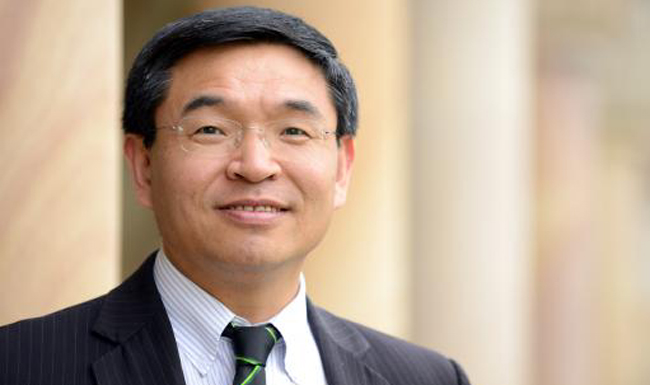
Provost and Senior Vice-President
Institution
University of Queensland, Australia
Country
China
Field
Chemistry
The Chemical Society of Japan gave Lu the Colloid and Surface Chemistry Lectureship Award 2015 for developing advanced materials in the areas of clean energy, the environment and healthcare.
(Photo: University of Surrey)
Related articles

The Key To Climate Models
As more countries embrace climate modeling, researchers turn to AI to improve the accuracy and efficiency of their models.

Too Hot To Work
As more heatwaves sweep through Southeast Asia, outdoor workers are confronted with an increased risk of deaths, disabilities and health issues in the region.

Accelerating Advancements In Healthcare
From disease diagnostics to drug development, healthcare applications are poised to receive a major boost from the combined power of AI and supercomputing.

Women Transforming Science
On this International Women’s Day, Asian Scientist Magazine speaks to six inspiring women in STEM who are leading their fields and have messages for younger women scientists in the region.
How Estrogen Shields Tumors From The Immune System
The female sex hormone contributes to tumor progression in the estrogen-negative cancers lacking hormone receptors.

Towards A Rosy Outlook For The Asian Rosewood Populations
Illegal logging of rosewood threatens not just the biodiversity, but communities living in forested areas as well. The Alliance of Bioversity International and CIAT is working in the lab and with farmers to combat this threat.

Elevating Whole Exome Sequencing With Twist Exome 2.0
Designed with best-in-class features, Twist Bioscience’s Exome 2.0 outperforms other exome sequencing panels in detecting rare and inherited diseases.

Spearheading Singapore’s Sustainable Development
Through applied research and industry collaboration, researchers at the Singapore Institute of Technology address sustainability and circularity issues in the key sectors of food, chemical and biotechnology.

Capping Carbon On Asia’s Supercomputers
Thoughtful processor design, optimized programming and strong government support are helping to make high performance computing ecosystems more sustainable.