


The Asian Scientist 100
Liu Bin

Professor
Institution
National University of Singapore
Country
Singapore
Field
Chemistry
Liu, who has developed water-dispersible organic nanoparticles that are brighter and more accurate than commercial quantum dots, was recognized with the 2016 President’s Technology Award.
(Photo: National University of Singapore)
AWARDS
- 2016 President's Technology Award
Related articles

Light, G-Proteins, Action! The Script For Optical Nerve Healing
The combination of light-activated neuronal activity and enhanced G-protein signaling has been shown to help re-grow damaged axons in mice.
Inspiring Minds, Fueling Passion At The Global Young Scientists Summit 2016
Liu Yuchun, a participant of the five-day Global Young Scientists Summit 2016, shares her experiences from the conference.

Fosun And Wenzhou TCM Hospital To Establish Geriatrics Hospital
Fosun Pharma and Wenzhou TCM hospital have joined hands to open a geriatrics hospital to help cope with the area's rapidly aging population.

Wider Wavelengths For Perovskite Solar Cells
By mixing two distinct cation-based perovskite materials, scientists were able to generate a high quality perovskite material capable of absorbing longer wavelengths of light.

Oncogene Identified As Inhibitor Of Cell Reprogramming
Inhibiting the well-known oncogene c-Jun could make it easier to turn somatic cells into induced pluripotent stem cells, study says.

Add Nickel For Cheaper Water Splitting
With the help of nickel, researchers have developed efficient molybdenum disulphide catalysts that operate at both acidic and neutral pH.
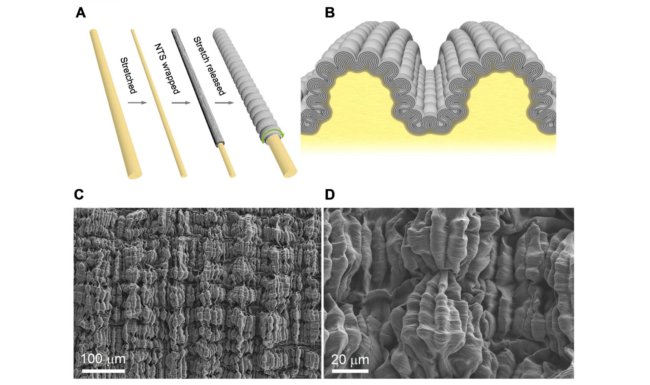
Stretching Conducting Wires To Their Limits
Using carbon nanotubes, scientists have developed wires amenable to stretching, twisting and flexing.
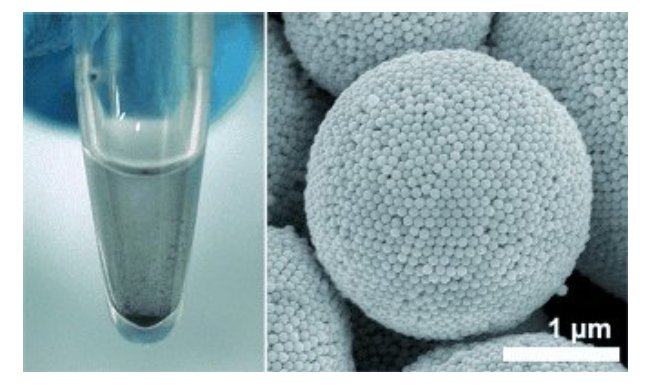
Nanoparticles Self-Assemble Into ‘Black Gold’
When nano-sized gold spheres self-assemble into more complex 3D structures, they turn from their characteristic brick red to black.
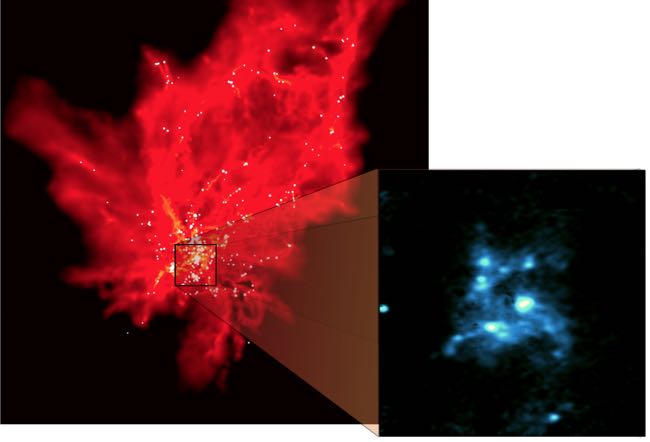
Spiral Arms Cradle Baby Stars
Giant spiral arms surrounding massive molecular gas cores protect proto-stars from radiation and mechanical feedback, allowing stars to form.