


The Asian Scientist 100
C. N. R. Rao
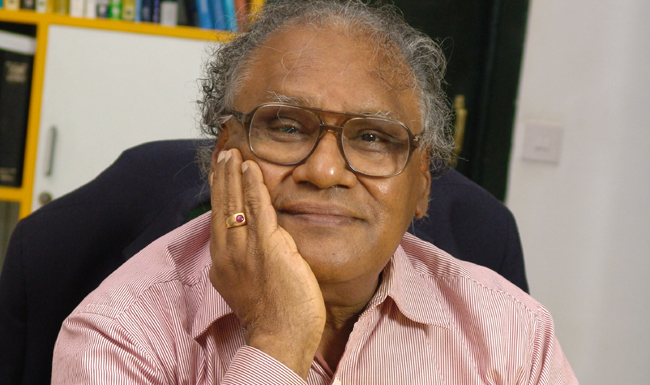
Head of the Scientific Advisory Council to the Prime Minister of India
Institution
Government of India
Country
India
Field
Leadership
Rao was conferred with the Order of the Rising Sun, Gold and Silver Star, Japan’s highest civilian award, for his contributions to science and Indo-Japanese science cooperation. He is the only Indian to be elected as a foreign member of the Japan Academy.
(Photo: Royal Society of Chemistry)
Related articles

Australian Marine Scientists Discover World’s First Hybrid Sharks
Australian marine scientists have discovered widespread hybridization in the wild between two shark species commonly caught in Australia's east coast shark fisheries.

Study: Farm Work By Women Drives Malnutrition In India
Women’s agricultural labor a key factor in malnutrition, according to a study of 12 villages in India.

So You Want To Be A Doctor? Be Prepared For The Ride Of Your Life
Seven doctors with extraordinary career paths shed light on the many options beyond medical school at Wildype Media Group’s ‘So You Want To Be A Doctor’ seminar.

Arthritis Drug Breathes New Life Into Heart Repair
Scientists in Japan have discovered that an anti-inflammatory drug commonly prescribed for rheumatic diseases can promote the reprogramming of fibroblasts into cardiac muscle cells.

Recognizing Scientific Excellence With The Asian Scientist 100
These early career scientists and veteran researchers of the Asian Scientist 100 are making waves in diverse sectors of academia and industry, shedding light on natural phenomena and developing new technologies for a better world.

Nepali Himalayan Fault Line Expert Wins 2015 C.N.R. Rao Prize
Professor Bishal Nath Upreti has been awarded the 2015 C.N.R. Rao Prize for his contributions to geoscience in Nepal.

Cautiously Optimistic About Immunotherapies
You may have read about some amazing immunotherapy cures, but for every anecdotal success there have been many more experimental failures.

Plastic Degrading Enzyme Enhanced
Researchers in South Korea have used genetic engineering to improve the ability of a bacterial enzyme to degrade plastic waste.

Understanding The Violent Collisions That Power Supernovae
Scientists have simulated the violent collisions between superluminous supernovae and its surrounding gas, which then emit extreme brightness.