


IN THE LAB
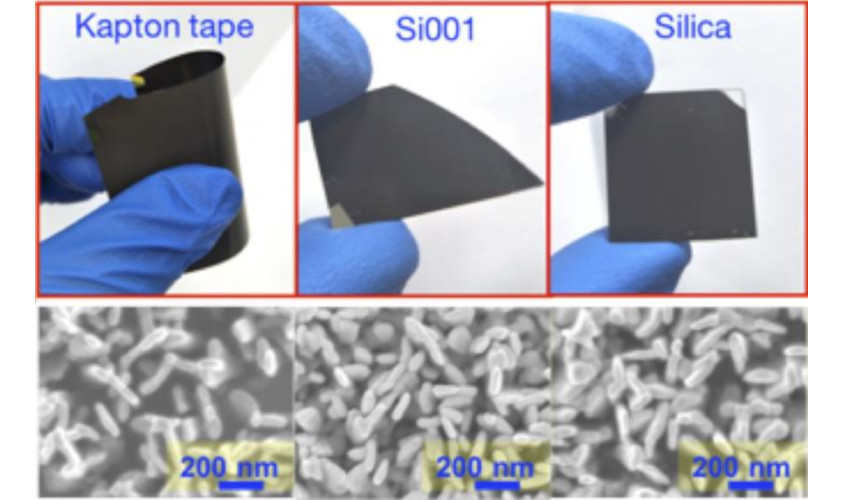
Lighting The Way For Optical Nanomaterials
Researchers in Singapore have fabricated a nanomaterial that absorbs visible and infrared light, and can be easily deposited onto other materials.

Observing The Dance Of Crystal Lattices
Scientists have used atomic force microscopy to observe the dynamic changes that occur on the surfaces of shape-shifting structures called porous coordination polymers.

Scanning Zebrafish Brains In Search Of New Drugs
Researchers have developed a high-throughput method of identifying drug candidates for the treatment of neurological disorders.

A Kill Switch For Genetically Modified Algae
By preventing bioengineered microalgae from growing outside the lab, researchers have reduced the risk of the genetically modified organisms escaping into the wild.

Decoding Cell-Specific DNA Methylation
Scientists in China have developed an algorithm that can link epigenetic modifications to specific cell types with 90 percent sensitivity.

Making Way For Muography
Scientists in Japan and Hungary have announced the opening of the NEWCUT laboratory, the world’s first facility dedicated to the study of muography.

Got Milk? These Spiders Do
Scientists have discovered a species of jumping spider that is capable of producing milk for its offspring, a trait previously thought to be unique to mammals.

Click To Conserve Breast Tissue
Being able to rapidly and accurately detect the difference between cancerous and non-cancerous breast tissue could be a boon for breast-conserving surgery.

A Pinch Of Salt May Have Started Life On Earth
Researchers have found that salt, together with ionic radiation from the environment, could have triggered the formation of complex molecules necessary for life.


