


Asian Scientist Newsroom

ABOUT
Asian Scientist Magazine is an award-winning science and technology magazine that highlights R&D news stories from Asia to a global audience. The magazine is published by Singapore-headquartered Wildtype Media Group.
Stories by Asian Scientist Newsroom

New Technology Gives Materials That Raw Magnetism
This magnetic material-based data storage technology has potential applications in high-speed massive data transfer.

How Non-Native Herbivores Wiped Out A Native Cycad Tree
Just three species of non-native herbivorous insects were enough to reduce the population of a tree species native to Guam by 90 percent within a decade.

Two Genetic Markers Linked To Anti-malarial Drug Resistance
Two genetic markers were strongly associated with the malaria parasite's ability to resist piperaquine, an anti-malarial drug.

Meet Sleepy & Dreamless, Mice That Can’t Grab Forty Winks
Researchers have described two mutant pedigrees—which they named Sleepy and Dreamless, of course—that are linked to dysfunctional sleep patterns in mice.
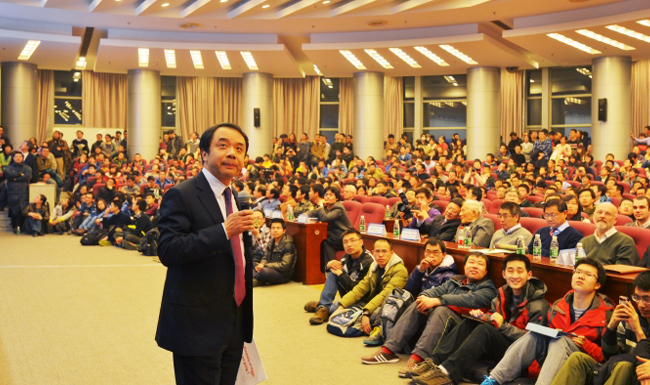
Wang Yifang Elected Foreign Member Of Russian Academy Of Sciences
Wang Yifang, who led the Daya Bay Reactor Neutrino Experiment, has been elected as a foreign member of Russia's highest scientific institution.

UNSW, Tata Consultancy To Jointly Develop Futuristic Tech
The University of New South Wales and Tata Consultancy have agreed to collaborate in the areas of machine learning, virtual reality, robotics, data analytics and cloud computing.

Food Security R&D Center Launched By CAS, John Innes Center
To tackle the global challenges of food security and sustainable healthcare, the Chinese Academy of Sciences has opened a joint research center with a UK partner institution.

TaiGen, HEC ChangJiang To Jointly Develop Chronic Hep C Treatments
The new company will develop, manufacture and commercialize treatments for chronic Hepatitis C virus infection in the Greater China region.

This Molecule Marks Cells Destined To Develop Into Heart
Researchers have identified a molecule that is expressed in early heart production, allowing them to isolate and study pure populations of human heart progenitor cells.