AsianScientist (Dec. 31, 2014) – “Could you spare some change?”
“Pesa?”
“Do you have a dollar on you?”
If you have lived in any city in any country—developed, developing or underdeveloped—it is beyond any doubt that you would have encountered these questions before.
As a graduate student in New Haven who patronizes Dunkin Donuts on a daily basis, I come across the same homeless folks who would ask the same customers the same question everyday. A few days before the Christmas holidays, I gave a dollar or two to those who needed the money for coffee in the freezing cold. A random act of kindness to those who need it the most is what the holiday season—and life, in general—ought to be about.
However, as callous as this sounds, I am not usually predisposed to giving money to the homeless. I do not believe in handing out short-term fixes to problems that could potentially last a lifetime. You and I could argue about the sanctity of my actions for a long time in the comments section, but I would rather not.
Let me explain why.
Even in a country as rich as the United States where the 2013 GDP per capita is US$53,142, there exists the very rich and the very poor. So, even among the very rich countries, income disparities co-exist with health disparities.
The famous Whitehall study (in the United Kingdom) showed that there was “an inverse social gradient in mortality from coronary heart disease among British civil servants.” Simply said, those who were of lower socioeconomic status were more likely to die from coronary heart disease (1.5 times for men and 1.47 times for women).
In the Whitehall study, there were no shantytowns, no lack of sanitary toilets, and no lack of nutrition as there may be in other underdeveloped countries. In fact, there was quite the opposite. In Whitehall, people had plenty of food to eat, proper shelter and clean water and toilet facilities.
And yet, it seemed that men who were at the top of the occupational hierarchy were less likely to die than those in the second tier of the occupational hierarchy.
In the United States, health disparities are even more stunning: non-Hispanic blacks are at least 1.5 times more likely to die of heart disease or stroke before the age of 75 than non-Hispanic white counterparts; the infant mortality rate for non-Hispanic blacks is more than double that of non-Hispanic whites, with rates varying geographically across the country, especially higher in the South and Midwest than elsewhere .
Even in a better off state such as Washington D.C., the political capital of the country, microcosmic health disparities exist: a 20-year life expectancy gap exists between poor blacks in downtown Washington and well-off whites in Montgomery County, Maryland, which is a mere metro ride away.
This is why I don’t give out money to the homeless everyday.
Because I really believe that the color of your skin and your social standing should not affect your health status. Because I think that health systems should not be broken to the extent that it excludes a significant portion of the population who may never afford healthcare, or a home.
In a nation where dreams are founded and Hollywood glitters, I sometimes wonder, too, what piece of the inequity fabric I have become a part of. I wouldn’t be able to remedy the homeless’ problem in the long-run by buying them a cup of coffee everyday. Certainly, it would make their day slightly better, but what about the homeless man’s gangrenous limbs that need amputation? Would he have adequate access to care? Is the healthcare system in the US built for it?
Harking back to a time when I was out in the field in Tanzania, I came across a drug user who had a swollen foot as he had injected heroin in the wrong location. He was crying and he asked me to bring him to the hospital. I had no such money, and neither did he.
It can be baffling to think that even in the richest countries, the poorest people still are no better off health-wise than many people in Malawi. A rich man in Pakistan would have the same access to healthcare as a rich man in the United States or Australia. A poor man remains a poor man health-wise and wealth-wise.
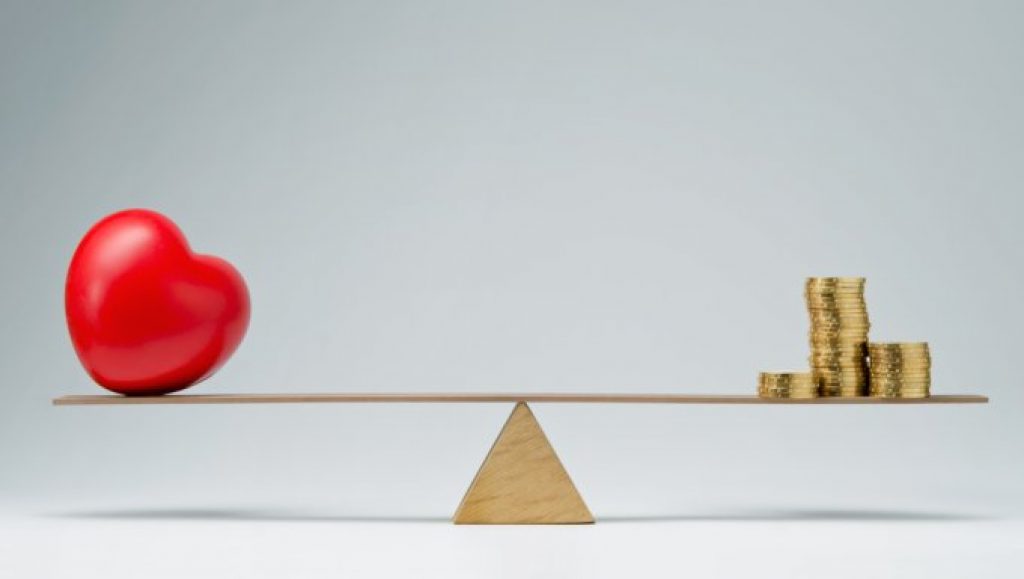
And so it goes: health is wealth, and wealth is health.
This article is from a monthly column called Our Small World. Click here to see the other articles in this series.
——-
Copyright: Asian Scientist Magazine; Photo: Shutterstock.
Disclaimer: This article does not necessarily reflect the views of AsianScientist or its staff.