AsianScientist (Mar. 7, 2014) – Analysis of a unique “SuperMum” (SuperAmma) handwashing campaign shows for the first time that using emotional motivators, such as feelings of disgust and nurture, rather than health messages, can result in significant, long-lasting improvements in people’s handwashing behavior, and could in turn help to reduce the risk of infectious diseases.
An evaluation of the behavior-change intervention, published in The Lancet Global Health journal, shows that six months after the campaign was rolled out in 14 villages in rural India, rates of handwashing with soap increased by 31 percent, compared to communities without the program, and were sustained for 12 months.
“Every year, diarrhea kills around 800,000 children under five years old. Handwashing with soap could prevent perhaps a third of these deaths”, explains study author Dr Val Curtis, from the London School of Hygiene & Tropical Medicine, UK.
“Handwashing campaigns usually try to educate people with health messages about germs and diseases, but so far efforts to change handwashing behaviour on a large scale have had little success. Understanding the motivating factors for routine hand washing is essential to any initiative likely to achieve lasting behavior change.”
In this cluster-randomized community trial, researchers from St John’s Research Institute and communications consultants from the Center of Gravity in Bangalore, India, tested whether an intervention designed to increase handwashing with soap in southern Andhra Pradesh, India, was successful in bringing about behavioral change.
As part of the SuperAmma intervention, promoters put on community and school-based events involving animated films, comic skits, and public pledging ceremonies during which women promised to wash their hands at key occasions and to help ensure their children did the same.
These activities targeted emotional drivers found to be the most effective levers for behavior change: disgust (the desire to avoid and remove contamination), nurture (the desire for a happy, thriving child), status (the desire to have greater access to resources than others), and affiliation (the desire to fit in).
Observed rates of handwashing with soap at key moments (after toilet, before food handling, or after cleaning a child) were measured in a random sample of 25 households in each village at the start of the study and at three subsequent visits (six weeks, six months, and one year after the intervention).
At the start of the study, handwashing with soap was rare in both the intervention and control groups (1% vs 2%). After six weeks, handwashing was more common in the intervention group (19% vs 4%), and after six months, compliance in the intervention group had increased to 37% compared with 6% in the control group. One year after the campaign, and after the control villages had received a shortened version of the intervention, rates of handwashing with soap were the same in both groups (29%).
“The SuperAmma campaign appears to be successful because it engages people at a strong emotional level, not just an intellectual level, and that’s why the behavioral change was long-lasting, said study co-author Katie Greenland, from The London School of Hygiene & Tropical Medicine, UK.
“Whether the observed increase in handwashing with soap is sufficient to reduce infection remains unclear, but in view of our promising results, public health practitioners should consider behavior change campaigns designed along the lines of our approach.”
The article can be found at: Biran et al. (2014) Effect of a behaviour-change intervention on handwashing with soap in India (SuperAmma): a cluster-randomised trial.
——
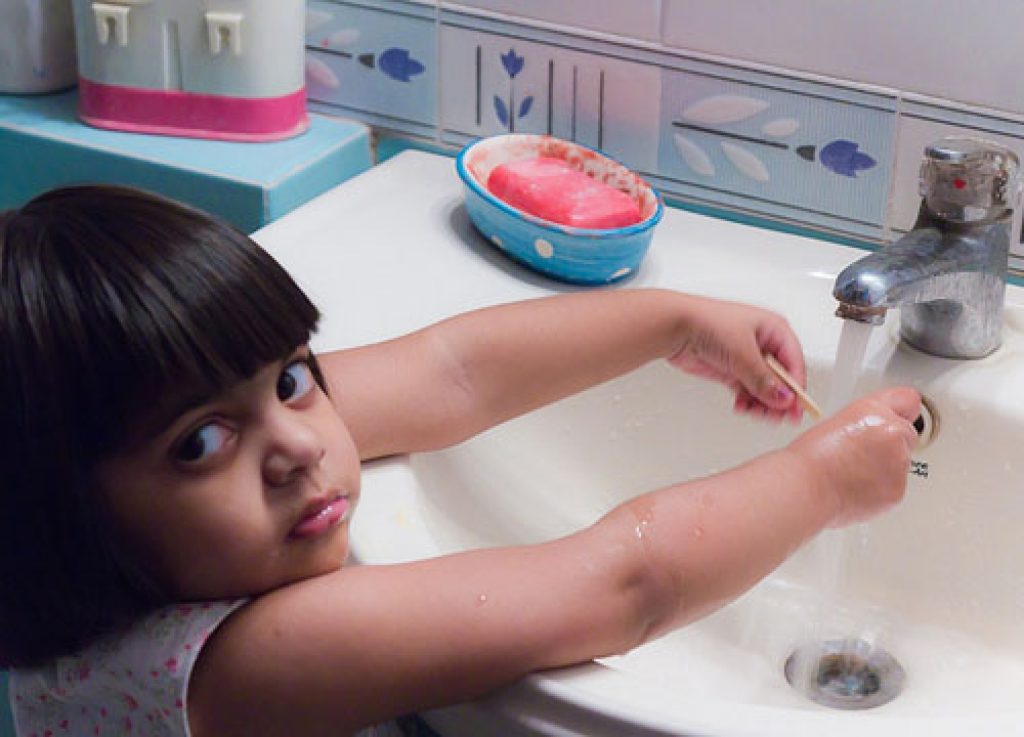
Source: The Lancet; Photo: manojksingh/Flickr/CC.
Disclaimer: This article does not necessarily reflect the views of AsianScientist or its staff.