AsianScientist (Apr. 12, 2011) – Johns Hopkins Bloomberg School of Public Health has established the first center to study chronic obstructive pulmonary disease (COPD) and other lung diseases in nonsmokers living in rural India with funding by the Indo-U.S. Science & Technology Forum (IUSSTF).
Characterized by chronic bronchitis and emphysema, COPD is a major public health problem in both developed and developing countries and affects 210 million people worldwide.
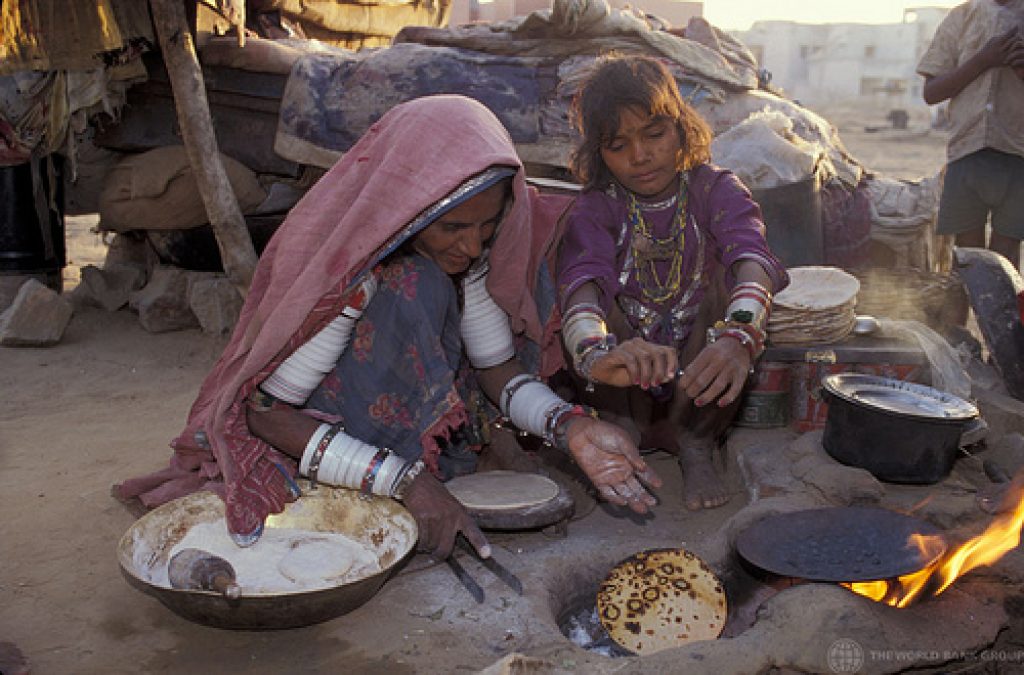
Recently, a disproportionate increase in environmental lung diseases have been observed in rural populations of India, caused primarily by indoor cooking using biomass and other solid fuels such as wood, coal, and charcoal. It is estimated that more than 3 billion people worldwide are exposed to high levels of indoor air pollution from biomass and solid fuel burning, compared with 1.1 billion who smoke tobacco.
The new Indo-U.S. Center of Excellence for Environmental Lung Diseases will be led by Shyam Biswal, PhD, professor in the Bloomberg School’s Department of Environmental Health Sciences; Sundeep Salvi, MD, PhD, FCCP, director of India’s Chest Research Foundation at Pune; and Anurag Agrawal, MD, of the Institute of Genomics and Integrative Biology, Council of Scientific and Industrial Research in Delhi.
Research will focus on the large rural cohort of more than 80,000 individuals enrolled in the Health and Demographics Surveillance System at Vadu, Pune, led by Sanjay Juvekar, PhD.
The IUSSTF will include a multidisciplinary team from the Bloomberg School of Public Health and the Johns Hopkins School of Medicine, as well as collaborators from the National Institute of Environmental Health Sciences and the Institute of Genomics and Integrative Biology, Council of Scientific and Industrial Research in Delhi.
The team’s initial efforts prior to the focus on health effects will be to assess and characterize the cohort’s exposure to indoor air particles.
According to Patrick Breysse, PhD, professor in the Bloomberg School’s Department of Environmental Health Sciences and Center collaborator, indoor air pollution in homes cooking with biomass in India is hundreds of times higher than outdoor air pollution.
Genetic predisposition to environmental factors is another area of great interest to the Center.
“We are starting to identify genes that influence COPD in cigarette smokers, but we have little knowledge about genetic interactions with environmental exposures, such as biomass cooking fuel exposure in nonsmokers,” said Stephanie London, MD, DrPH, a genetic epidemiologist at NIEHS who will be investigating this challenging problem.
Source: Johns Hopkins School of Public Health.
Disclaimer: This article does not necessarily reflect the views of AsianScientist or its staff.