AsianScientist (Aug. 06, 2026) – Across many mammalian species, mothers rarely leave their young ones out of their sight, not just to protect them but to show them how to move, forage, and escape predators. Scientists have observed this behaviour across primates, from macaques, chimpanzees, to us humans. But not every mother can carry her young everywhere. Some, like meerkats, to elephants, and orcas, leave them with a “babysitter” from their own group until foraging is done. Others, like rats and mice, simply leave their pups in a nest and return later. It works, but the risk is high: a predator can strike while the mother is away.
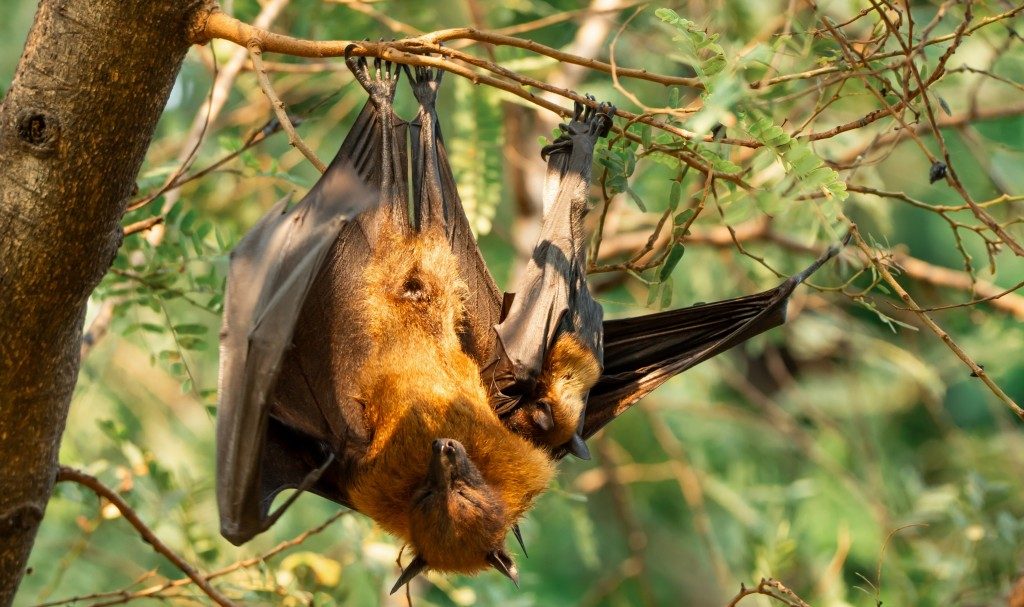
So what does a nocturnal, flying mammal that can’t rely on vision do? In a new study, researchers from Doshisha University in Japan found that the Japanese house bat (Pipistrellus abramus) relies on a flexible multimodal solution, combining sound and touch to relocate its pups fast. For the first several days of life, these mothers carry their pups constantly.
When the researchers briefly separated the two, the mothers reliably went back for their own pup – be it single, twins or triplets – and ignored pups that weren’t theirs. Their selectivity was strongest in the earlier days after birth, and tapered off as the pups grew, fading out around postnatal day 20, once they had gained independence of body temperature regulation, coordination and echolocation. Bat moms, in other words, are hands-on for when it counts, and hands-off once it doesn’t.
Sound does much of the work. When the team played back isolation calls (the sounds that pups make when searching for their mother), the mother bats moved toward them, and returned faster to pups that called more insistently.
Touch matters too. P. abramus mothers usually have two or three pups but only two teats, so they can’t hold a full litter at once. The researchers found that a mother’s urge to retrieve rose when she was carrying fewer pups than teats, and dropped when she was holding two. The missing pup, in other words, is something she feels, not just something she hears.
—
Source: Doshisha University ; Image: shutterstock/BENZINE
The study can be found at Tactile pup loss and acoustic signal enhance selective maternal retrieval behavior in echolocating bats, Pipistrellus abramus
Disclaimer: This article does not necessarily reflect the views of AsianScientist or its staff.