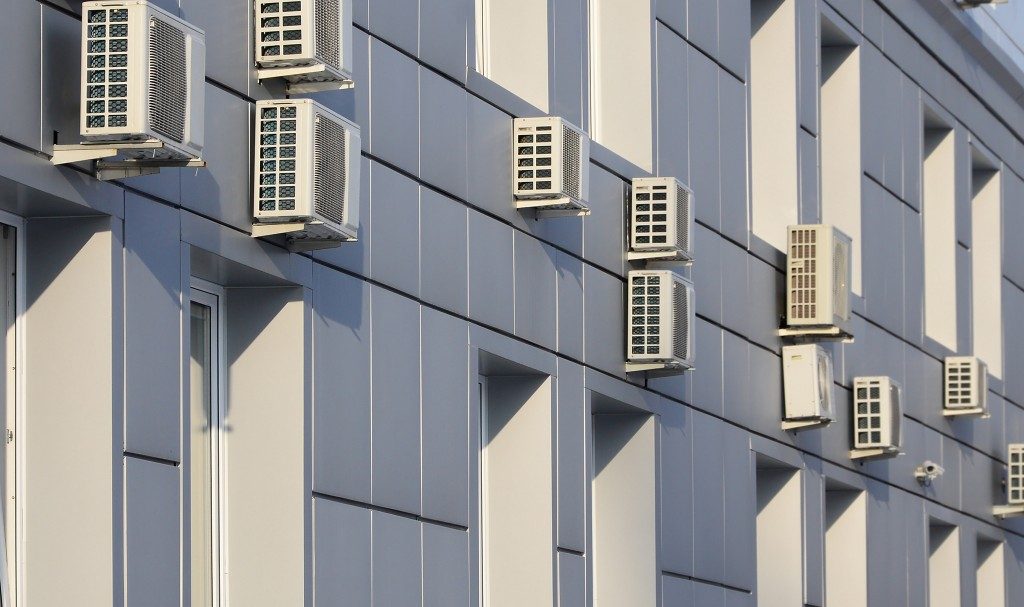
AsianScientist (Jul. 06, 2026) –As global temperatures rise, air conditioning has become essential to protect people from extreme heat. But a new study has found that widespread reliance on private cooling may be creating a paradox in cities: the more effectively households cool themselves indoors, the less urgency they feel to support the broader climate measures needed to cool cities.
The study, led by researchers from the Singapore University of Technology and Design (SUTD) and the Singapore-ETH Centre (SEC) has found that households that depend heavily on air conditioning are less likely to adopt energy-saving habits or support community-wide heat mitigation strategies. The findings, published in Sustainable Cities and Society, describe this phenomenon as “behavioural insulation”, where effective indoor cooling dampens the perceived urgency to address heat through collective action.
The study forms part of the Climate Resilient Citizenry project, a multi-institutional collaboration examining how urban residents perceive and respond to climate risk.
According to the paper, Singapore provided an ideal setting for the study. As a dense, tropical and highly urbanised city with widespread access to air conditioning, it offers a glimpse into challenges that many rapidly warming cities across Asia may soon face.
Heat awareness does not always change behaviour
To explore how people respond to rising temperatures, the researchers analysed survey responses from 967 adults across 416 households in Singapore, together with spatial heat indicators and household electricity consumption records.
The results revealed a clear divide. People who felt more affected by heat were more likely to discuss climate issues and encourage others to act. But this rarely translated into lower household energy use. Those who relied most on air-conditioning tended to consume more electricity and were less likely to adopt energy-saving habits.
“One of the key findings is that experiencing heat does not automatically translate into lower-energy behaviour or stronger collective climate action,” said Dr Natalia Borzino, lead author and Postdoctoral Researcher at SEC. “People may become more climate-aware and more vocal about heat, while still relying heavily on energy-intensive cooling to manage daily life.”
The researchers also observed that heavy air-conditioning users showed less support for public heat mitigation measures such as expanding urban greenery, increasing tree cover and improving neighbourhood shading, even while spending more on keeping their own homes cool.
Beyond air conditioning
According to the researchers, the findings point to something more systemic than individual indifference — a gradual shift in which widespread private cooling may weaken the behavioural conditions associated with support for collective climate action.
“Heat is not just a temperature challenge. It is also a behavioural and planning challenge,” said Research Assistant Professor Samuel Chng, Head of the Urban Psychology Lab at LKYCIC, SUTD. “If cities rely too heavily on private cooling, they risk locking in higher energy demand while weakening the collective support needed for wider urban heat solutions.”
The researchers say they are not arguing against air-conditioning, as cooling is essential for comfort, health and wellbeing. Rather, they argue that cooling should be complemented by urban design strategies which include shading, greening, improved ventilation, reflective building materials and climate-sensitive planning, that reduce outdoor temperatures in the first place.
“The challenge for cities is to design systems where individual adaptation and collective resilience reinforce each other, rather than move in opposite directions,” said Professorial Research Fellow Dr Harvey Neo, lead Principal Investigator of the Climate Resilient Citizenry project.
—
Source: Singapore-ETH Centre ; Image: mehaniq/Magnific
The study can be found at : Private cooling, urban heat, and the limits of collective climate action in tropical cities
Disclaimer: This article does not necessarily reflect the views of AsianScientist or its staff.