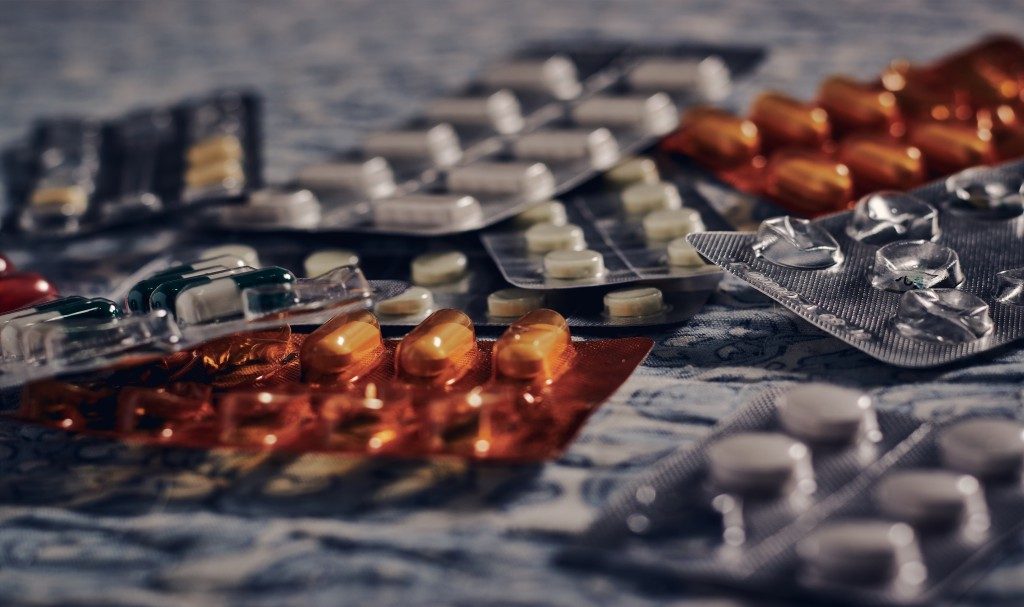
AsianScientist (May. 21, 2026)– The everyday medications in our homes may be a major source of water pollution. A recent study of Hong Kong’s major rivers revealed that common over-the-counter (OTC) drugs accounted for 85 percent of pharmaceutical pollution in the wet season compared to just 13 percent for prescription medicines.
“We often assume that complex or restricted prescription medications pose the greatest environmental risk, but our findings shine a new light on everyday household medicines,” said lead author Professor Kenneth Mei-Yee Leung, Director of the State Key Laboratory of Marine Environmental Health (SKLMEH) and Associate Dean of Science College at City University of Hong Kong (CityUHK).
Because medicines are designed to be effective when taken orally, they often have molecular properties that make them mobile in water.
However, these properties also allow them to easily travel in river environments, through estuaries and eventually enter the ocean, where they can pose threats to marine ecosystems. Pharmaceutical residues have been found even in deep seas and remote marine environments.
“Pharmaceutical pollution is not a local pollution issue at a specific site. Hence, we should adopt a river-estuary-sea perspective to prioritise pollutants for control and management,” said Leung.
Current available research has focused mainly on screening chemicals for persistence, mobility, and toxicity (PMT) in site-specific risk assessments. However, this does not allow researchers to distinguish between pollutants causing localised contamination and those that could be a larger ecological threat.
Led by Leung, researchers from CityUHK and the Guangdong Research Institute of Water Resources and Hydropower, introduced a new assessment framework that also models the movement of these pollutants.
“Our approach integrates the river/estuary-to-sea transport trajectory modelling with consideration of persistence, mobility, and toxicity (PMT) of the pharmaceutical pollutant and thus the results can better evaluate and prioritise pharmaceuticals for risk management,” said Leung.
Integrating a transport trajectory model helped the researchers evaluate not only how these chemicals act at the sample site, but also how they travel after entering the river environment.
About 80 percent of the pharmaceuticals investigated were found to be PMT pollutants in water environments. In particular, caffeine, paracetamol, cetirizine, cimetidine, sitagliptin, and fexofenadine were identified as priority pollutants for control in the investigated rivers due to their high potential to disperse into marine environments. Notably, the top four priority pollutants were all OTC drugs.
“Because OTC drugs are easily accessible and continuously consumed, they act as ‘pseudo-persistent’ pollutants” explained Leung. “Even if they break down easily, our constant use means they are always present in our aquatic ecosystems.” For example, caffeine and paracetamol are not persistent chemicals by nature, but they were still identified as priorities for control.
The team suggested that targeted interventions based on rivers that disperse the most high-priority pharmaceuticals could effectively reduce pharmaceutical pollution in aquatic environments. Upgrading sewage treatment and installing stormwater retention tanks along major rivers could help to mitigate emissions of pharmaceutical residues into the sea.
“Raising public awareness is also essential,” said Leung. “Residents should return unwanted or expired medications for proper disposal rather than throwing them away or flushing them. Clearer government guidance on safe drug disposal is urgently needed.”
—
Source: City University of Hong Kong; Image: wirestock/Magnific
This article can be found at Uncovering prevalence of environmentally mobile pharmaceuticals and their priority control strategies in river-estuary continuum of Hong Kong
Disclaimer: This article does not necessarily reflect the views of AsianScientist or its staff.