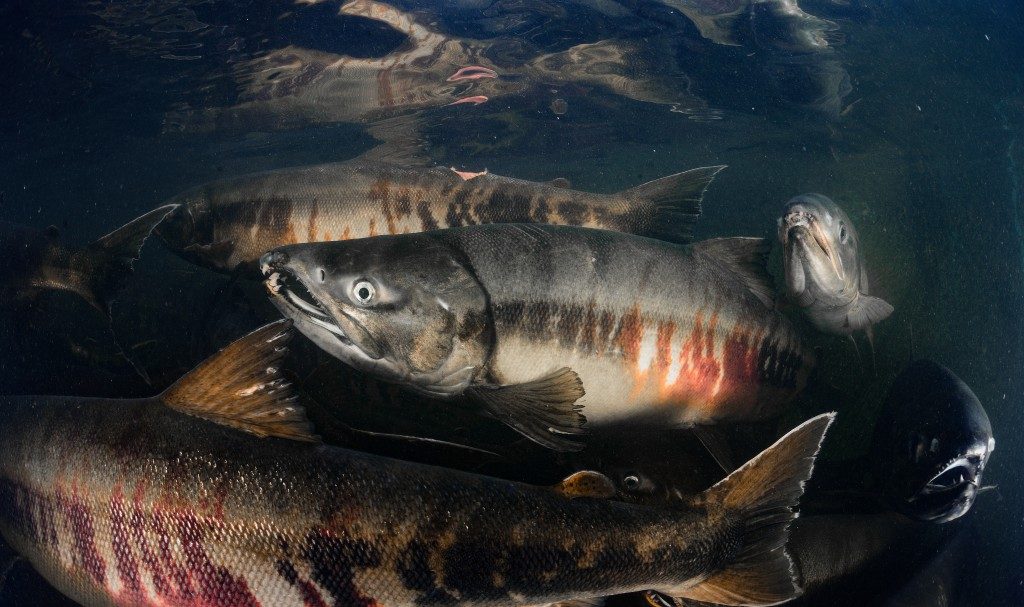
AsianScientist (Apr. 21, 2026)–Japanese chum salmon, known locally as shirozake, are crucial to Japan’s fishing industry and culture, particularly in Hokkaido, and can be recognised by their faint vertical stripes and silvery sides. They are born in freshwater, migrate to the ocean to grow and mature, and then return to freshwater to spawn.
Today, most chum salmon are hatchery-raised. Each year, fishery workers collect eggs and sperm from returning adults, rear them in controlled conditions, and release nearly a billion juvenile salmon into about 140 rivers across northern Japan. These fish migrate into the North Pacific and Bering Sea, where they grow before returning to spawn.
Despite this extensive hatchery system, chum salmon populations in Japan have sharply declined since the early 2000s. According to the Ministry of Agriculture, Forestry and Fisheries, most salmon consumed in Japan is now imported from countries like Chile and Norway.
This decline is particularly worrying as southern populations, such as those in Japan and British Columbia, are decreasing, while northern populations in Alaska and Russia are increasing.
Researchers from the Arctic Research Centre at Hokkaido University investigated this shift. Their findings were published in the journal Scientific Reports.
By analysing data from 1998 to 2022, the scientists developed models combining salmon location data with environmental factors such as temperature, food availability, ocean currents, salinity, and wind to map changes in suitable habitats over time.
They found that rising ocean temperatures are shrinking suitable habitats in the south and expanding them in the north, pushing salmon toward colder regions. Moderate winds can support suitable conditions, but strong winter winds disrupt the ocean environment and affect growth.
At the same time, food sources like plankton are declining in key regions, leaving salmon with less energy to grow and survive, particularly affecting younger fish. Extreme events such as marine heatwaves are further worsening these conditions. A major heatwave between 2013 and 2015 caused significant habitat loss and forced salmon to shift their range, with some populations moving north toward colder waters, including the Arctic.
For Japanese chum salmon, the impacts are especially severe. While early ocean habitats remain relatively stable, feeding and winter habitats have declined, reducing survival rates. Poor food availability and warming waters have weakened many fish, contributing to the sharp drop in their numbers.
“The results show that changing ocean conditions have altered where chum salmon can thrive. Suitable habitats have declined overall due to ocean warming, reduced zooplankton which are an important food source, and increasingly frequent marine heatwaves,” said assistant professor Irene D. Alabia, Arctic Research Centre, Hokkaido University.
“Our results show broad-scale habitat loss in the North Pacific for chum salmon,” she added.
As habitats shrink in the south, salmon are expanding northward toward higher-latitude waters like the Chukchi Sea. This shift highlights how climate change is reshaping marine ecosystems and aligns with the decline in Japanese chum salmon populations.
Marine ecosystems are highly sensitive to climate change, with rising temperatures, altered food webs, and extreme events reshaping species distributions worldwide.
“Tracking the redistribution of chum salmon habitat is crucial for conserving the declining salmon resources,” Alabia added.
Researchers warn that even intensive hatchery programmes may not offset large-scale environmental changes. As the North Pacific continues to warm, the future of Japanese chum salmon will depend on how quickly fisheries management and conservation strategies adapt.
The study also notes that other factors are compounding the issue, including competition from other fish species, like pink salmon, and hatchery releases that can affect wild populations. These findings add to growing evidence that climate change is significantly affecting marine life.
—
Source: Hokkaido University; Image: Shpatak/Shutterstock
This article can be found at: Climate-driven shifts in marine habitat explain recent declines of Japanese Chum salmon
Disclaimer: This article does not necessarily reflect the views of AsianScientist or its staff.