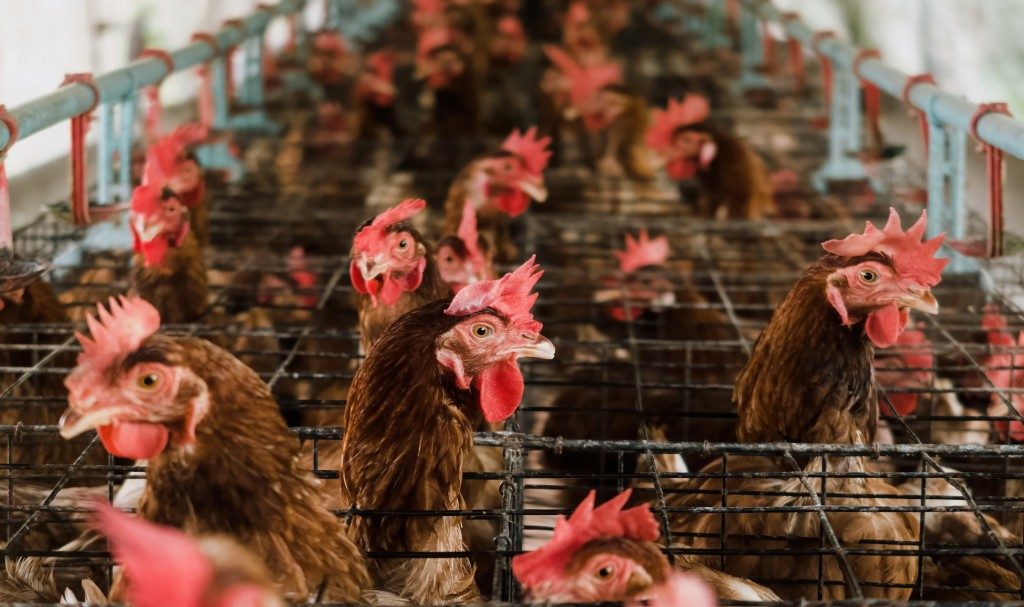
AsianScientist (Apr. 09, 2026)–Live poultry markets are common across Asia but present a high-risk environment for the spread of infectious diseases. With crowds of humans and birds mingling closely, viruses such as avian influenza and coronaviruses can easily pass between birds or be transmitted to humans, making it crucial to monitor disease to prevent outbreaks.
Current methods for virus detection in live markets involve swabbing the throats and digestive tracts of randomly selected birds, a time consuming and labour intensive process that poses biosafety risks to workers. It can also fail to detect viruses if the selected birds are not infected at the time of testing.
Researchers from Duke-NUS Medical School have discovered environmental surveillance could be a viable method to detect a broader range of viruses in live poultry markets.
“We showed that direct animal testing is not always necessary to detect pathogenic viruses in live-bird markets,” said first author Peter Cronin, research fellow at Duke-NUS’ Emerging Infectious Diseases Signature Research Programme.
The team took samples from two live poultry markets in Cambodia, including air, cage surfaces, drinking water, and carcass wash water. They then conducted metagenomic analysis on the samples to identify the viruses present in the environment from their genetic material.
The results were compared with traditional bird swabs taken at the same locations and times.
Although there was no significant difference in the number of viruses captured, environmental sampling detected a more diverse spread of viruses overall, with air samples showing the highest diversity of virus species captured.
Importantly, environmental surveillance was able to capture a few viruses that escaped traditional swabbing, including H5N1, an avian influenza A virus with a 50 percent mortality rate in humans.
“This study provides a more comprehensive view of viral circulation in live poultry markets than is possible through single-animal testing alone,” said Professor Gavin Smith, co-senior author and Director of the Emerging Infectious Diseases Signature Research Programme.
Environmental surveillance cannot entirely replace traditional bird swabbing method, as some viruses are more easily detected through direct swabbing compared to environmental sampling.
The researchers suggest that the best strategy to maximise virus detection involves environmental sampling in combination with strategic poultry swabbing. This would minimise the biosafety risks to workers while achieving a comprehensive overview of viruses present in the live market environment.
“By applying unbiased metagenomic sequencing to environmental samples, we capture viral material shed across shared air and surfaces, enabling broader detection in a cost-effective and scalable manner while reducing the need for close animal contact,” said Smith.
Environmental surveillance could also enable targeted risk mitigation strategies. For example, a high viral load in air samples indicate a need for better ventilation.
“These findings show that surveillance in high-risk animal-human interfaces can be strengthened though more efficient and safer approaches. Improving early detection ultimately supports stronger outbreak preparedness,” said Professor Lok Sheemei, Interim Vice-Dean for Research at Duke-NUS Medical School
The team is currently expanding their environmental surveillance research efforts in other settings like pig slaughterhouses and wildlife environments. Once refined, this method could be an efficient and practical tool for early outbreak detection.
—
Source: Duke-NUS Medical School; Image: SomboonKaeoboonsong/Freepik
This article can be found at: Environmental metagenomics enhances detection of circulating viruses from live poultry markets in Cambodia
Disclaimer: This article does not necessarily reflect the views of AsianScientist or its staff.