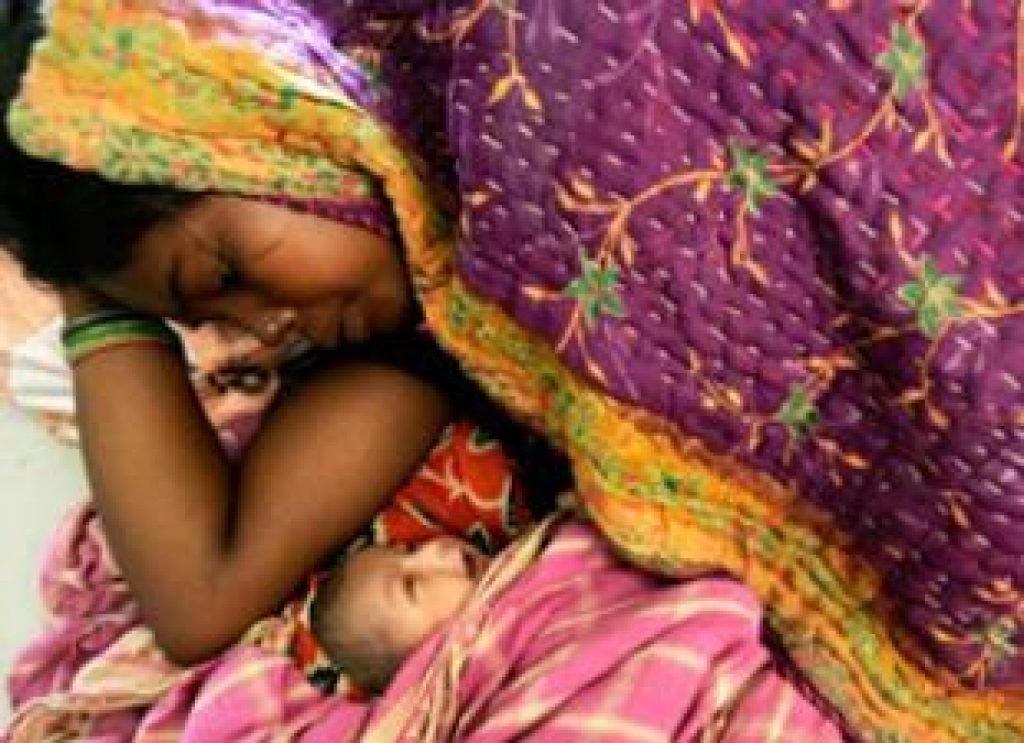
AsianScientist (Aug. 4, 2011) – The Harvard School of Public Health (HSPH) has been awarded a US$14.1 million, four-year grant from the Bill & Melinda Gates Foundation to test the effectiveness of an innovative checklist-based childbirth safety program in reducing deaths and improving outcomes of mothers and infants in India.
Atul Gawande, associate professor at HSPH and a surgeon at Brigham and Women’s Hospital, will lead the BetterBirth clinical trial together with Jonathan Spector, research associate at HSPH and a neonatologist at Massachusetts General Hospital.
The study, which was jointly developed by the World Health Organization (WHO) and HSPH, will evaluate the impact of the WHO Safe Childbirth Checklist program at 120 hospitals in Uttar Pradesh, India.
Of 130 million births annually in the world, nearly 350,000 result in the mother’s death, one million in intrapartum stillbirth, and another 3.1 million in infant death during the neonatal period. Most deaths occur within 24 hours of delivery.
Uttar Pradesh one of India’s least developed states, has 31 percent of its 190 million people living in poverty. Consequently, the mortality rate for women giving birth there is estimated at 440 per 100,000 births, vs. 254 per 100,000 births in the country as a whole.
By comparison, the maternal mortality ratio in the United States is 13 per 100,000 births.
“To reduce these deaths, pregnant women are increasingly encouraged to deliver in health facilities instead of at home. But success requires a basic standard of care that is often missing,” Dr. Gawande said.
“At times, the problem is inadequate resources, but often the issue is a lack of handwashing or screening for use of available antibiotics. We designed a simple strategy to help facilities upgrade their performance.”
The WHO Safe Childbirth Checklist program was developed from 2008 to 2010 through a comprehensive review of existing guidelines.
It was field tested at 17 birth sites in a number of countries, including India, Pakistan, Nigeria, Kenya, Ghana, and China, and it aims to improve the safety of the mother and infant from the moment the woman enters a hospital, through labor and delivery, to time of discharge home.
The one-page checklist encourages the medical team to pause at critical points in the flow of clinical care to confirm that essential tasks have been performed. It targets bleeding, infection, elevated blood pressure, and prolonged or obstructed labor – the major killers of mothers worldwide. For infants, the focus is on recognizing and managing asphyxia, infection, and complications of prematurity.
The WHO Safe Childbirth Checklist program is based on the success of WHO’s Safe Surgery Checklist, developed by HSPH and WHO under Gawande’s leadership, which has since been introduced in more than 4,000 hospitals worldwide.
——
Source: Harvard University.
Disclaimer: This article does not necessarily reflect the views of AsianScientist or its staff.