

AsianScientist (Nov. 12, 2026) – Producing tofu and soy milk produces soy pulp, a byproduct that is also known as okara. 1.4 billion tons of okara are generated by the soy food industry every year, often being discarded as food waste or used as low-value animal feed.
Although okara has a nutrient rich profile, it is unpalatable, coarse, and hard to digest. “Okara is a soybean by-product that is rich in nutrients, but its high fiber content, short shelf life and less appealing flavor have long limited its use in food products for people,” said Professor William Chen, Director of the Food Science and Technology Programme at Nanyang Technological University(NTU).
Researchers from NTU collaborated with Japanese food manufacturer Ichimasa Kamaboko to study how oyster mushroom fermentation might transform the nutritional content and taste of okara to make it a viable food product.
Fungal fermentation breaks down the proteins and insoluble fiber found in plant matter like okara and release amino acids and glucose, making it more digestible and potentially more palatable.
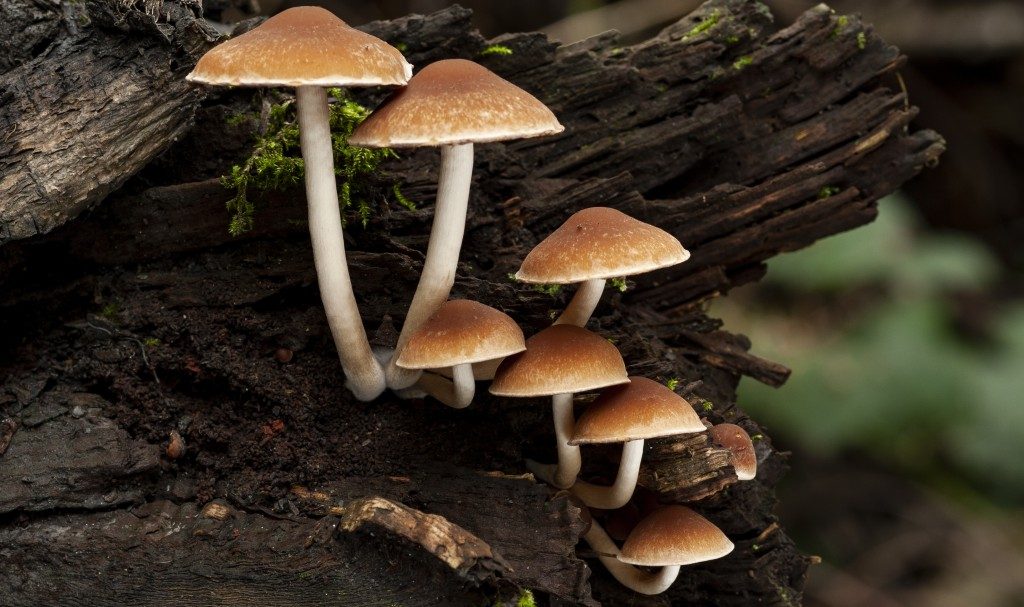
The researchers used solid state fermentation, growing oyster mushroom mycelium (the fine root-like network of fungi) directly on moist solid material. They tested this on various preparations of okara as well as mixing in wheat bran and sawdust, materials commonly used for mushroom-growing.
Lab analysis revealed that protein content in fermented okara increased by 27.7-30.2 percent, alongside a 2.6-6.4 fold increase in glucose concentrations.
The researchers also analyzed the material using an electronic tongue, a device that uses chemical sensors to objectively measure taste. Fermentation had a significant influence on the taste compounds in okara, making it more umami and less sour overall.
Free amino acid levels increased, particularly glutamic and aspartic acid, which confer an umami flavor. There were also more 5’ nucleotides, which enhance the umami flavor from the amino acids. Succinic acid, associated with savoriness, became the main organic acid, while sour citric acid usually decreased after fermentation.
However, some of the fermented samples also increased in bitterness and dryness. The researchers plan to further optimize their process to achieve a better flavor outcome, investigating aroma profiles and incorporating human sensory evaluation.
“Our findings show that oyster mushroom mycelium can naturally improve okara by changing its composition and producing compounds that give it a savory, umami taste. In addition, a separate study by my team also showed that oyster mushrooms grown on a substrate containing okara have enhanced nutritional value. Together, these findings create an opportunity to make better use of both okara and mushrooms as sustainable food sources in the future,” said Professor Chen. “This proof-of-concept approach offers a promising way to turn okara into more valuable food ingredients instead of discarding it, though further research is needed to evaluate pre-treatment requirements, energy efficiency, scale-up feasibility and production economics alongside food safety and consumer acceptance.”
Dr Malsha Samarasiri, Research Fellow at NTU and first author of the study added:“Rather than treating okara solely as a waste stream, our research demonstrates that mushroom fermentation can create new, high value opportunities to use this soybean by-product in food applications, contributing to a more circular and sustainable food system”
—
Source: Nanyang Technological University, Singapore ; Image: wirestock/magnific
This article can be found at: Taste characterization of okara and okara-derived substrates fermented by Pleurotus ostreatus mycelium
Disclaimer: This article does not necessarily reflect the views of AsianScientist or its staff.